Checking an infant’s pulse is a vital component of BLS and First Aid. Unlike adults, infants have smaller, more delicate bodies, making proper technique essential to determine if the heart is beating effectively.
Pulse assessment informs rescuers whether the infant requires CPR, rescue breaths, or additional medical intervention. Knowing how to help a fragile patient during these critical moments can significantly impact survival and recovery.
Recognizing When to Check an Infant’s Pulse
Before performing any intervention, recognizing the need to check a pulse is key. Infants may appear unresponsive due to choking, cardiac issues, or other emergencies.
Situations requiring pulse assessment include:
- The infant is unresponsive and not crying or moving
- Breathing is absent, irregular, or gasping
- Sudden collapse or traumatic injury
- Signs of distress such as pale or bluish skin
Understanding these signs helps caregivers and healthcare providers act quickly, showing practical knowledge of how to save an infant’s life.
Preparing to Assess the Pulse
Preparation ensures accuracy and safety when checking an infant’s pulse. Proper positioning and technique are essential for a reliable reading.
Steps to prepare include:
- Placing the infant on a firm, flat surface, ensuring comfort and safety
- Exposing the infant’s chest or neck area for access to key pulse points
- Washing hands thoroughly before assessment
- Ensuring you have good lighting and a quiet environment to detect subtle pulses
Preparation reflects a careful approach to First Aid and BLS, allowing responders to remain calm and precise during emergencies.
Identifying the Correct Pulse Points
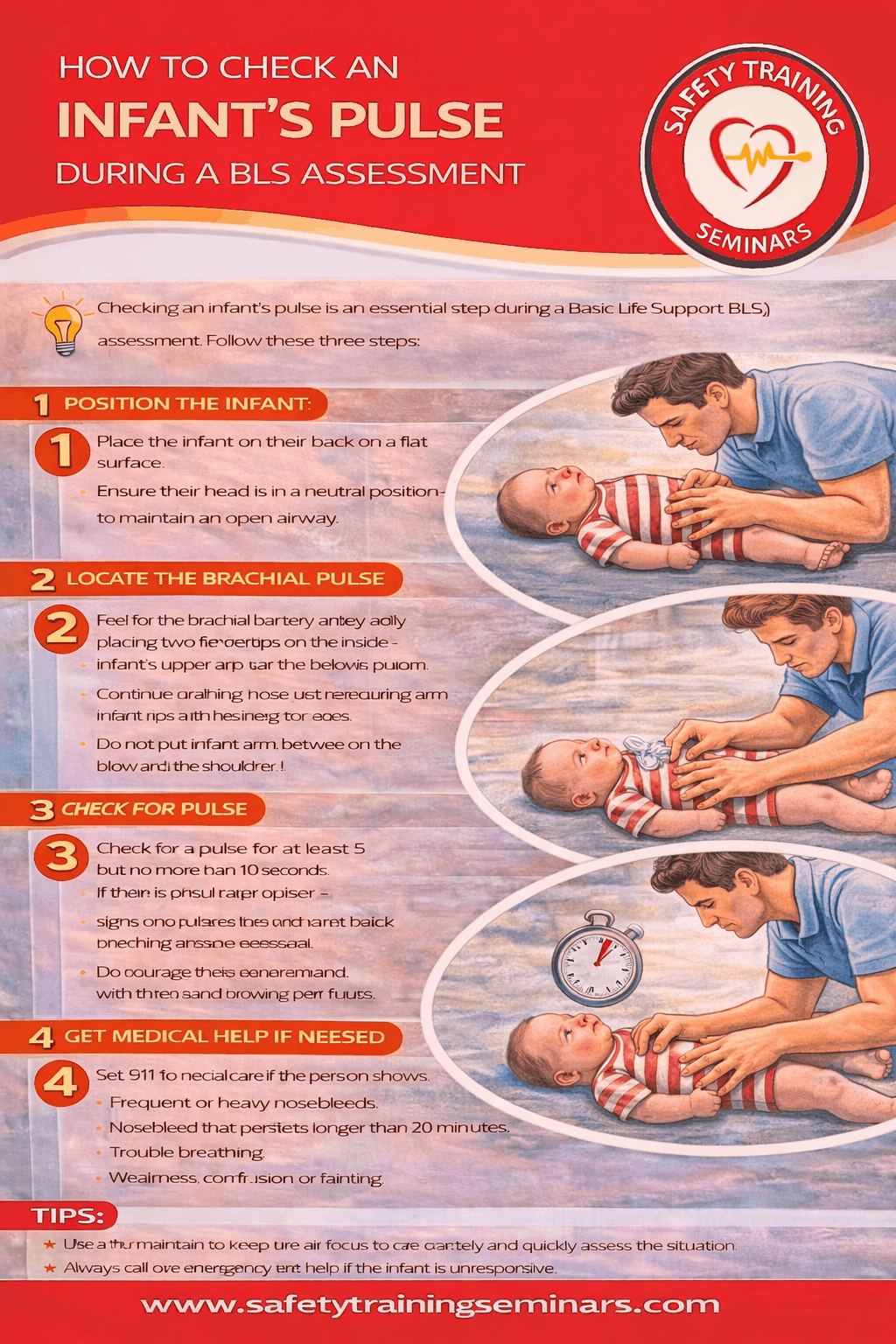
Infants have two primary pulse points for BLS assessment: the brachial pulse and the carotid pulse. Knowing which to use is crucial.
- Brachial pulse: Located on the inside of the upper arm, between the shoulder and elbow.
- Carotid pulse: Located in the neck, alongside the windpipe. Use this only if the brachial pulse is not palpable.
To find the pulse:
- Use the tips of two fingers (index and middle)
- Apply gentle pressure; avoid pressing too hard as infants’ arteries are delicate
- Feel for a regular heartbeat or any detectable rhythm
Identifying the correct pulse point demonstrates how to help while minimizing harm to the infant.
Performing the Pulse Check
Checking an infant’s pulse requires patience, accuracy, and attention to detail.
Steps include:
- Place two fingers on the chosen pulse point (usually the brachial artery)
- Gently press and feel for pulsation for at least 5–10 seconds
- Assess pulse rate: normal infant heart rate ranges from 100–160 beats per minute
- Look for irregularities, such as weak, rapid, or absent pulse
If no pulse is detected or it is below 60 beats per minute with signs of distress, initiate CPR immediately. Proper technique ensures you know exactly how to save the infant during a critical event.
Monitoring While Preparing for BLS Interventions
Pulse assessment is not an isolated action; it often leads to First Aid, CPR, or other BLS interventions. Continuous monitoring ensures timely and effective response.
Tips include:
- Observe breathing patterns while checking the pulse
- Reassess the pulse frequently during ongoing care
- Combine pulse assessment with other vital signs, such as color, movement, and responsiveness
- Remain calm and communicate clearly if working in a team setting
Continuous monitoring reinforces your ability to help efficiently and safely during emergencies.
Common Mistakes and How to Avoid Them
Even experienced responders can make errors when checking an infant’s pulse. Awareness of these mistakes ensures accurate assessment.
Common errors include:
- Pressing too hard, which may occlude the artery
- Checking too briefly, leading to missed pulses
- Failing to monitor for changes in pulse or breathing
- Relying solely on visual cues without palpating the pulse
Avoiding these mistakes demonstrates careful application of BLS and First Aid techniques and ensures maximum safety for the infant.
Practicing Pulse Assessment for Confidence
Hands-on practice during BLS courses is essential to build confidence and proficiency in pulse checks. Repetition helps responders act quickly and accurately in real-life situations.
Benefits of practice include:
- Faster identification of life-threatening conditions
- Improved accuracy in detecting weak or irregular pulses
- Greater confidence in combining pulse checks with CPR and other BLS skills
- Better team coordination during emergencies
Practice ensures that responders are always ready to act and understand how to help infants in critical moments.
Integrating Pulse Checks into Overall Infant Care
Pulse assessment should be seen as part of a broader BLS and First Aid strategy for infants. It works in tandem with monitoring, CPR, and emergency intervention.
Strategies for integration include:
- Including pulse checks in all pediatric emergency simulations
- Training caregivers and healthcare providers on accurate technique
- Reinforcing the link between pulse assessment and timely CPR
- Encouraging continuous education to stay prepared for emergencies
Proper integration ensures that caregivers know not just how to save but also how to act confidently and effectively.
Final Thoughts: Pulse Assessment Can Save an Infant’s Life
Checking an infant’s pulse during a BLS assessment is a small yet crucial step in life-saving care. Accurate pulse detection informs responders whether CPR or other interventions are needed, providing critical information in high-stakes situations.
Safety Training Seminars emphasizes hands-on practice and detailed guidance for pulse assessment, ensuring participants are confident and prepared. Understanding how to help infants during emergencies empowers caregivers and healthcare professionals to act decisively and save lives.