First Aid training is an essential skill for anyone who wants to be ready to respond to emergencies. Whether you are a healthcare provider, a parent, or a workplace responder, learning First Aid, CPR, and BLS equips you to act confidently during accidents or sudden health crises.
Preparation for a First-Aid course ensures that you know how to help effectively and understand the steps required to how to save lives. Beyond theory, it emphasizes practical skills, making you ready to handle situations where immediate action can make a critical difference.
Assess Your Current Knowledge
Before attending a First-Aid course, it’s crucial to evaluate your existing knowledge and experience. Understanding what you already know helps identify areas to focus on during preparation.
Key points to assess include:
- Familiarity with CPR and BLS techniques
- Knowledge of basic First Aid procedures such as wound care, bandaging, and burn management
- Understanding emergency response priorities like assessing safety and calling for help
- Previous experience assisting someone in an emergency
This self-assessment ensures you are prepared to build upon your current skills and understand how to help in various emergencies.
Gather Study Materials and Resources
Having the right learning materials is essential for a structured preparation. Resources provide both theoretical knowledge and practical guidance, which makes hands-on practice easier during the course.
Recommended materials include:
- First-Aid manuals and textbooks covering basic emergency care, CPR, and BLS procedures
- Instructional videos showing step-by-step CPR, choking relief, and wound management techniques
- Practice sheets for assessing vital signs, responsiveness, and breathing
- Notes or summaries from previous BLS or First Aid courses
Using these materials allows you to review and internalize key concepts, so you are ready to demonstrate how to save lives efficiently.
Focus on Core First-Aid Skills
First-Aid courses emphasize practical, lifesaving skills. Focusing on these skills before the course can make hands-on sessions smoother and boost confidence.
Essential skills to review and practice include:
- Performing CPR on adults, children, and infants
- Using the recovery position effectively for unresponsive patients
- Providing care for choking, bleeding, burns, and fractures
- Understanding basic BLS procedures and airway management
- Learning when to call for help and activate emergency services
By concentrating on these skills, you ensure that you know how to help and can act promptly in real emergencies.
Practice Scenario-Based Learning
Practical scenarios help reinforce First-Aid skills and simulate real-life emergencies. Engaging in scenario-based learning improves critical thinking, speed, and teamwork.
Tips for scenario practice:
- Role-play different emergencies such as cardiac arrest, choking, or severe bleeding
- Practice switching between rescuer, assistant, and observer roles
- Incorporate proper CPR, BLS, and First Aid techniques into each scenario
- Emphasize communication, decision-making, and efficiency
Scenario-based practice allows participants to internalize skills, understand how to help, and prepare to how to save lives when seconds matter.
Review Emergency Response Protocols
Understanding emergency response steps and protocols is critical for acting quickly and effectively. Reviewing these procedures before a First-Aid course helps participants respond logically under pressure.
Key areas to review include:
- Primary assessment: safety, responsiveness, and breathing
- Secondary assessment: vital signs, injuries, and medical history
- CPR sequences and proper compression techniques
- Choking relief techniques for adults, children, and infants
- Wound management, burn care, and fracture stabilization
Familiarity with these steps ensures that you can provide proper First Aid and understand how to help efficiently during any emergency.
Prepare Mentally and Physically
First-Aid courses require both focus and endurance. Preparing yourself mentally and physically enhances learning and ensures you can perform skills effectively.
Preparation strategies include:
- Get adequate rest before course sessions to maintain alertness
- Practice stress management techniques to stay calm during emergencies
- Maintain physical fitness to perform CPR and other physical First-Aid tasks
- Adopt a confident mindset, knowing that preparation will guide your actions
Mental and physical readiness enables participants to act decisively, demonstrating life-saving how to help skills when needed.
Organize Logistics and Course Readiness
Organizing yourself for the course ensures that you can focus entirely on learning and practice without distractions.
Steps include:
- Confirm registration, timing, and location of the First-Aid course
- Bring identification, course materials, and personal protective equipment (PPE) such as gloves and masks
- Review any pre-course assignments or online modules
- Arrive early to familiarize yourself with the training environment
Being prepared logistically allows participants to fully engage with the course, enhancing confidence in BLS, CPR, and First Aid skills and knowing how to save lives.
Continuous Practice and Learning
Preparation doesn’t end with course completion. Regular practice ensures that skills remain sharp and that responders can act confidently in emergencies.
Suggestions for ongoing practice include:
- Participate in refresher courses and practice sessions
- Review First-Aid techniques and protocols regularly
- Practice CPR and BLS skills on mannequins or simulation devices
- Stay updated on best practices in emergency care
Continuous learning ensures you always know how to help effectively and are prepared to how to save lives when real emergencies occur.
Final Thoughts: Preparation Saves Lives
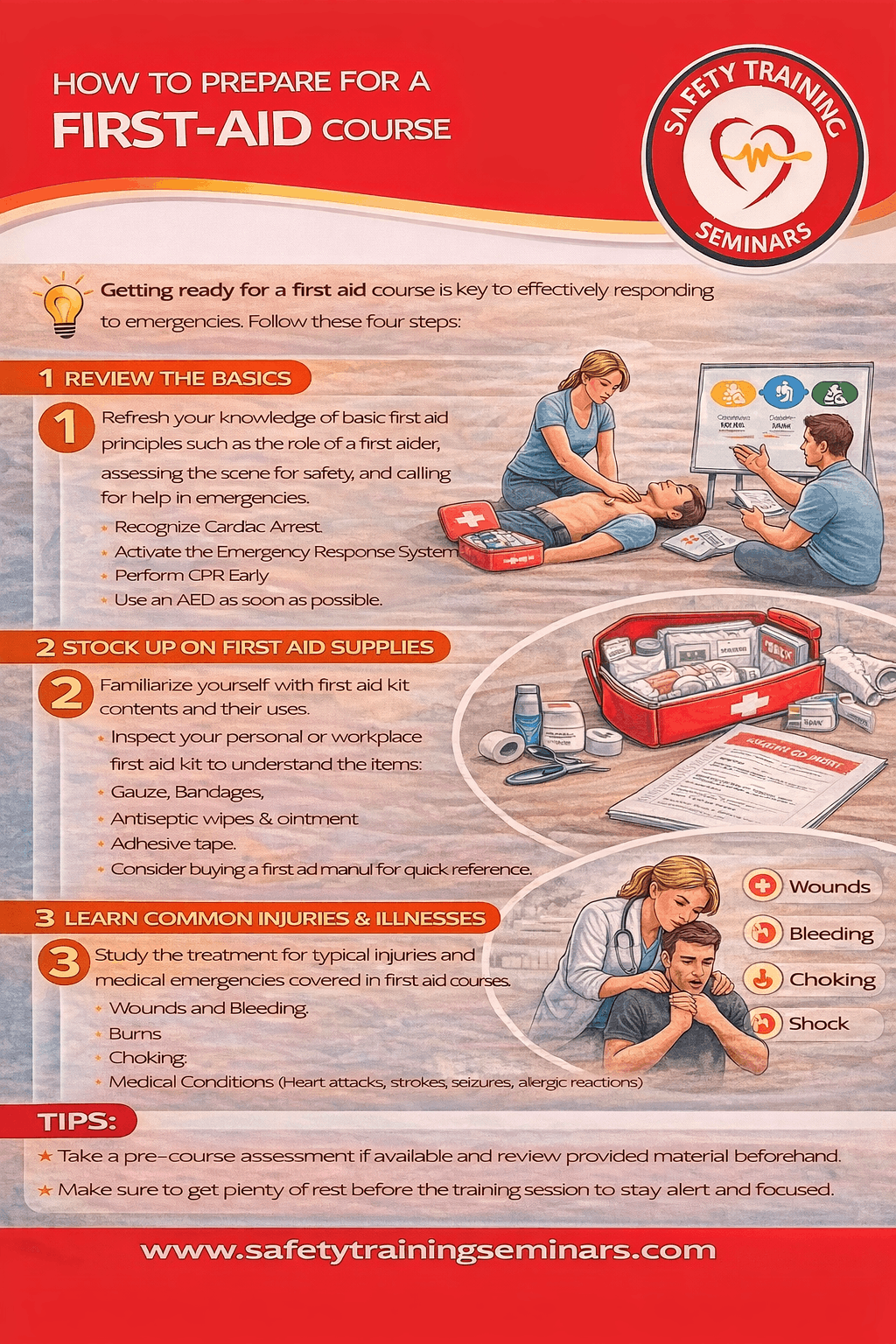
Preparing for a First-Aid course is a critical step toward becoming a competent and confident responder. By evaluating your skills, gathering study materials, practicing techniques, reviewing protocols, and preparing mentally and physically, you ensure you gain maximum benefit from your training.
At Safety Training Seminars, we emphasize thorough preparation, helping participants understand how to help in emergencies and how to save lives. Being prepared ensures responders act confidently and efficiently when faced with life-threatening situations.