Pediatric Advanced Life Support (PALS) is an essential course for healthcare providers, emergency responders, and caregivers who handle children and infants in medical or emergency settings. It focuses on recognizing and responding to life-threatening pediatric emergencies.
Proper preparation for a PALS course ensures participants are ready to act efficiently in critical situations. Familiarity with First Aid, CPR, and BLS principles enhances confidence, enabling responders to know how to help children effectively and understand how to save lives in emergencies.
Assess Your Current Pediatric Knowledge
Before attending a PALS course, evaluating your existing pediatric care knowledge is crucial. Understanding your strengths and weaknesses allows for focused preparation.
Key areas to review include:
- Basic pediatric BLS and CPR techniques for infants and children
- Recognition of pediatric vital signs and normal ranges
- Awareness of common pediatric emergencies, such as respiratory distress, shock, and cardiac arrest
- Previous First Aid experience and hands-on practice
A thorough self-assessment ensures you know how to help efficiently and are prepared to build on your existing skills during the course.
Gather Learning Materials and Resources
Having the right study materials sets the stage for effective preparation. Resources should cover pediatric emergency protocols and case-based learning exercises.
Essential materials include:
- PALS manuals with pediatric assessment, medication, and resuscitation protocols
- Online modules, practice quizzes, and videos demonstrating pediatric airway management and CPR
- Reference charts for pediatric vital signs and medication dosages
- Notes from prior BLS and First Aid courses
Organizing and reviewing these resources ensures a structured approach to learning and reinforces your ability to how to save lives during emergencies.
Focus on Key Pediatric Skills
PALS preparation requires targeted practice of specific pediatric skills. These include both technical and decision-making abilities that can make a difference in an emergency.
Important skills to practice include:
- Pediatric airway management techniques, including bag-mask ventilation and advanced airway devices
- Recognition of pediatric cardiac rhythms and shock states
- High-quality pediatric CPR and BLS adapted for age and size
- Proper medication administration and dosing
- Team-based resuscitation and effective communication
Focusing on these skills ensures participants understand how to help children effectively and are confident in real-life pediatric emergencies.
Practice Scenario-Based Learning
Simulated scenarios are a core component of PALS preparation. Practicing realistic emergencies enhances both technical and teamwork skills.
Tips for scenario practice:
- Work with peers to role-play pediatric emergencies such as respiratory failure, cardiac arrest, or anaphylaxis
- Rotate roles between team leader, compressor, airway manager, and medication administrator
- Communicate clearly and coordinate tasks while maintaining patient safety
- Incorporate First Aid, CPR, and BLS principles into realistic situations
Scenario-based practice builds confidence, ensuring responders know how to save children and act decisively during pediatric emergencies.
Review Pediatric Assessment and Algorithms
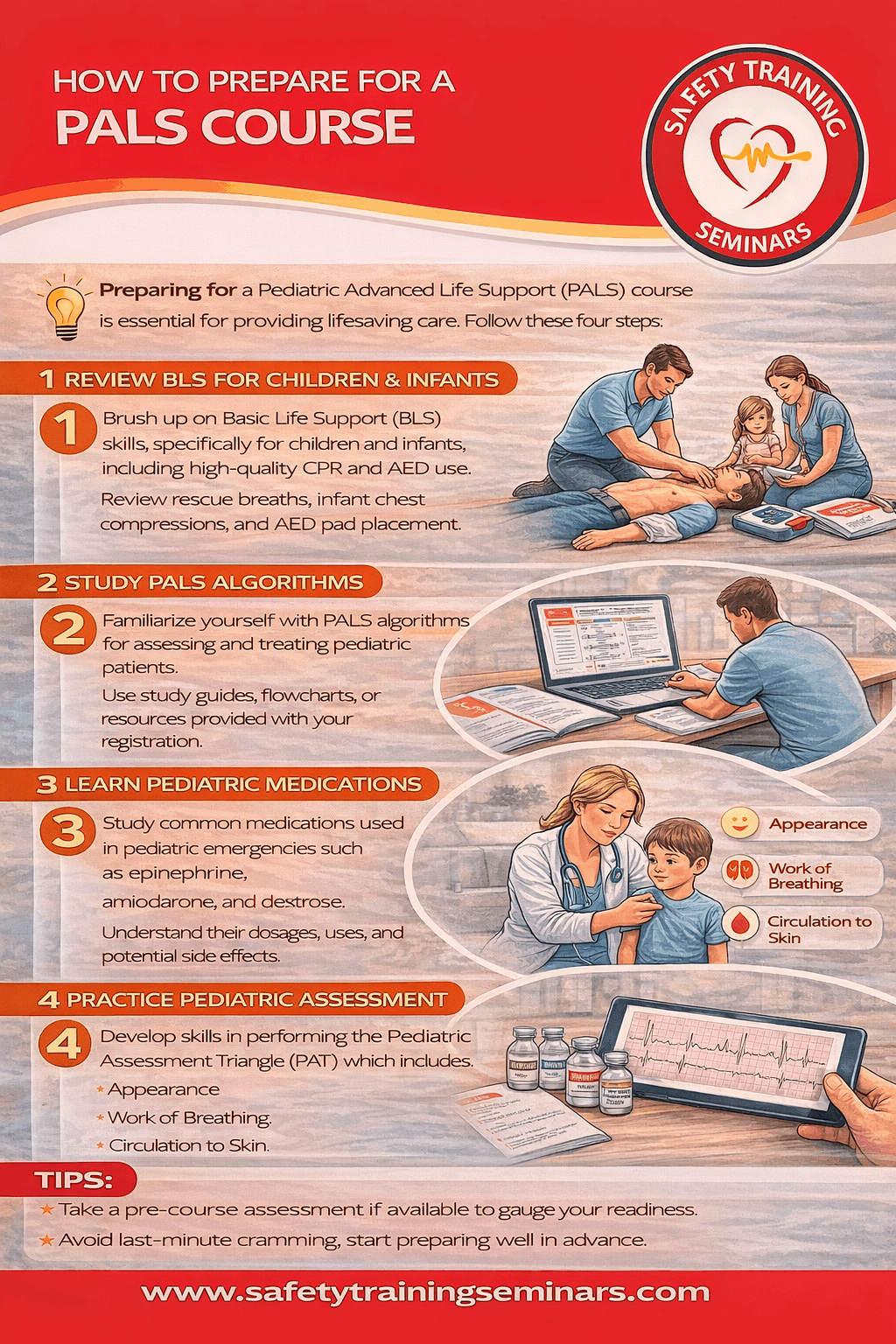
Understanding pediatric assessment and structured intervention algorithms is crucial for PALS success. These provide guidance on decision-making during high-pressure situations.
Key points to review include:
- Pediatric assessment triangles for evaluating airway, breathing, and circulation
- Cardiac arrest, bradycardia, and tachycardia management algorithms
- Shock recognition and treatment strategies
- Post-resuscitation care and monitoring
Familiarity with these protocols ensures participants act promptly and accurately, demonstrating knowledge of how to help in life-threatening situations.
Prepare Mentally and Physically
PALS courses are demanding, requiring both mental focus and physical endurance. Preparing your body and mind enhances performance and retention.
Preparation strategies include:
- Resting adequately before the course to maintain alertness
- Practicing stress management techniques such as visualization or breathing exercises
- Maintaining physical fitness for performing pediatric CPR and BLS
- Adopting a confident mindset, knowing that practice will guide skill mastery
Mental and physical readiness allows participants to act decisively, demonstrating effective how to save skills under pressure.
Logistics and Course Readiness
Organizational preparation ensures minimal distractions, allowing full focus on learning.
Steps include:
- Confirm registration, schedule, and location of the PALS course
- Bring required identification, manuals, and PPE (gloves, masks, etc.)
- Arrive early to familiarize yourself with the course setup
- Review any pre-course assignments or online modules
Being logistically prepared lets participants focus fully on acquiring critical skills in First Aid, BLS, and CPR, ensuring confidence during practical sessions.
Continuous Learning Beyond the Course
Preparation doesn’t end with completing the course. Continuous review and practice reinforce pediatric emergency skills.
Suggestions include:
- Participate in refresher courses and simulations regularly
- Review pediatric assessment algorithms and emergency medications
- Practice hands-on pediatric CPR and BLS techniques with peers
- Stay informed on the latest updates in pediatric emergency care
Ongoing practice ensures that responders always know how to help and can act effectively when pediatric emergencies arise, reinforcing their ability to how to save lives.
Final Thoughts: Preparation Saves Lives
Preparing for a PALS Certification course is a step toward becoming a confident and competent pediatric responder. Evaluating skills, gathering resources, practicing techniques, reviewing algorithms, and preparing mentally and physically all contribute to course success.
At Safety Training Seminars, we emphasize thorough preparation, helping participants learn how to help children and how to save lives in critical moments. With proper preparation, every participant can gain the skills and confidence needed to respond efficiently to pediatric emergencies.