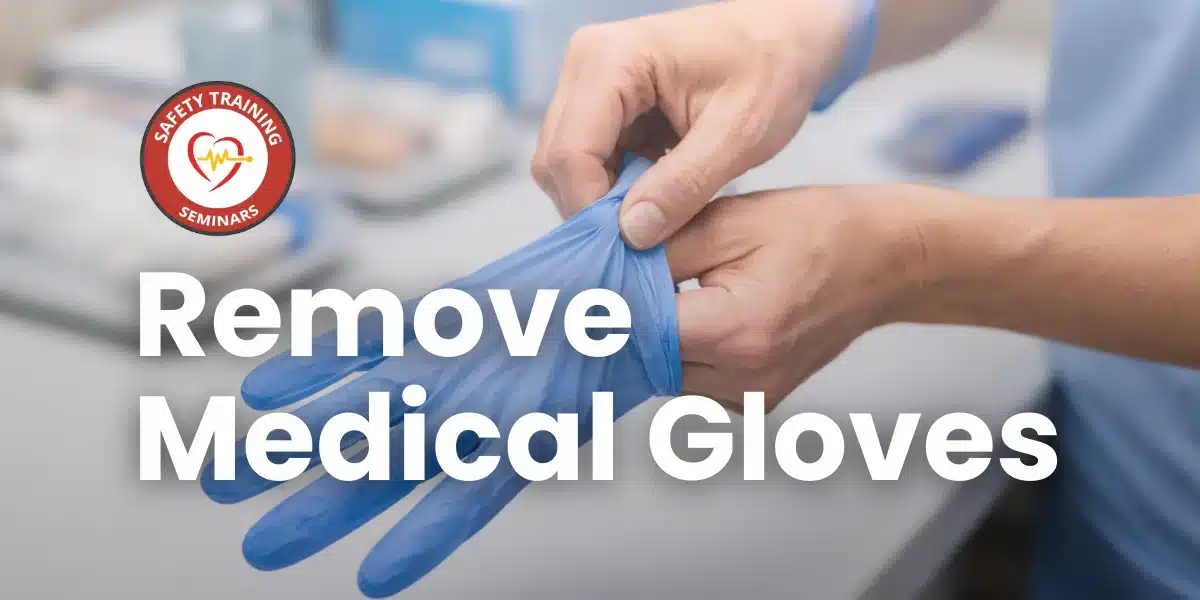
Medical gloves are essential in First Aid, CPR, and BLS scenarios to protect both the rescuer and the patient from contamination and infection. However, improper removal can lead to the transfer of germs or hazardous substances.
Knowing how to help safely includes mastering the correct technique for glove removal. This simple yet critical step ensures that your hands remain clean, reducing the risk of cross-contamination during emergencies and daily medical care.
When to Remove Medical Gloves
Gloves should be removed immediately after completing a procedure or when they become contaminated. Recognizing the right moment prevents the spread of pathogens.
Situations that require glove removal include:
- After providing CPR or First Aid care
- When gloves are visibly torn, punctured, or contaminated
- Following handling of bodily fluids, chemicals, or infectious materials
- Before touching personal items, food, or clean surfaces
Timely removal demonstrates awareness of how to save yourself and others from potential harm.
Preparing to Remove Gloves Safely
Preparation is key to ensuring that glove removal does not cause contamination. Following a systematic approach protects both you and the environment.
Steps include:
- Positioning yourself over a sink or waste container to catch the gloves
- Avoiding touching your skin or clothing with contaminated surfaces
- Using one hand to carefully grip the outside of the opposite glove at the wrist
- Preparing to invert the glove while removing it
Being deliberate during preparation highlights practical knowledge of BLS and First Aid safety protocols.
Step-by-Step Technique for Glove Removal
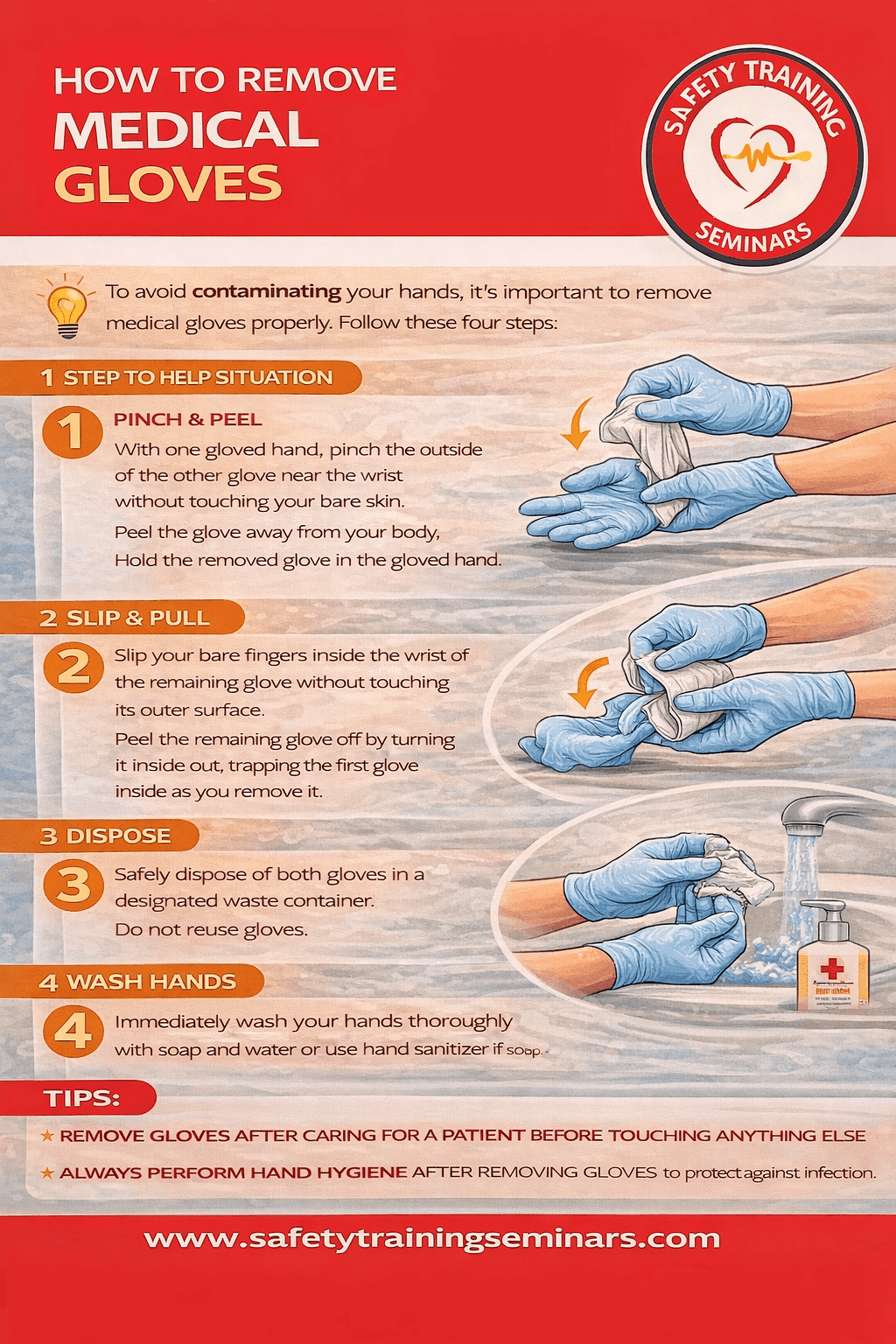
Proper technique is essential for removing gloves without contaminating your hands. The following method ensures safe removal:
- Pinch the outside of one glove near the wrist, being careful not to touch your skin.
- Peel the glove away from your hand, turning it inside out.
- Hold the removed glove in the opposite gloved hand.
- Slide fingers under the wrist of the remaining glove without touching its outer surface.
- Peel off the second glove over the first glove, ensuring both are inverted.
- Dispose of the gloves immediately in a designated waste container.
This method demonstrates precisely how to help skills and prevents the transfer of pathogens.
After Removing Gloves: Proper Hand Hygiene
Glove removal alone is not enough to maintain safety. Proper hand hygiene is essential to complete the protective process.
Key steps include:
- Washing hands thoroughly with soap and water for at least 20 seconds
- Using hand sanitizer with at least 60% alcohol if soap and water are unavailable
- Cleaning fingernails, between fingers, and around the wrist area
- Avoiding touching the face, hair, or clothing immediately after glove removal
Following these steps reinforces BLS and First Aid best practices and ensures the highest level of safety.
Common Mistakes and How to Avoid Them
Even experienced responders can make mistakes when removing gloves. Being aware of these errors helps prevent contamination and infection.
Common mistakes include:
- Touching the outside of the glove with bare skin
- Ripping gloves instead of peeling them off carefully
- Failing to wash hands immediately after removal
- Removing gloves too quickly, causing accidental spills or contact with contaminated surfaces
Awareness of these pitfalls demonstrates practical knowledge of how to save yourself and others while performing medical care.
Training for Confidence in Glove Removal
Hands-on practice in BLS and First Aid courses helps build confidence and proficiency in glove removal. Repetition ensures that the technique becomes second nature in real emergencies.
Benefits of training include:
- Reducing hesitation and mistakes during high-pressure situations
- Reinforcing proper hygiene and contamination control
- Improving overall preparedness in CPR and medical care scenarios
- Promoting a culture of safety in workplaces, schools, and home care environments
Practicing these skills ensures that responders are always ready to how to help safely and effectively.
Integrating Glove Removal into Overall Safety Practices
Glove removal is one part of a broader set of safety protocols in medical and emergency care. Combining proper removal with hand hygiene, PPE use, and safe waste disposal maximizes protection for everyone involved.
Integration strategies include:
- Teaching glove removal as part of BLS and First Aid courses
- Encouraging consistent use of gloves during all patient interactions
- Ensuring ready access to hand-washing stations and sanitizers
- Reinforcing the habit of safe disposal and environmental cleanliness
Following these strategies demonstrates comprehensive knowledge of how to save lives and protect both caregivers and patients.
Final Thoughts: Mastering Glove Removal Saves Lives
Removing medical gloves safely may seem simple, but it is a critical step in First Aid, CPR, and BLS procedures. Proper technique, hygiene, and attention to detail prevent contamination, protect caregivers, and help maintain safe environments.
Safety Training Seminars provides practical guidance on glove removal and overall emergency safety practices, ensuring that participants are confident and prepared. Learning how to help safely and effectively is an essential skill that enhances readiness in any medical or emergency situation.