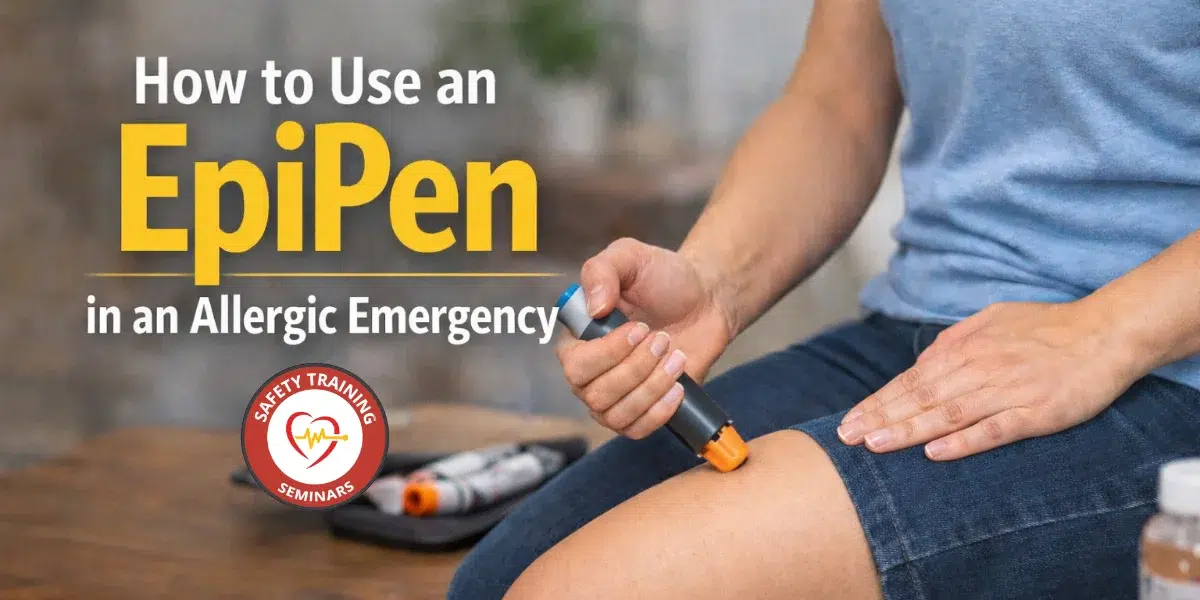
Severe allergic reactions, also known as anaphylaxis, can occur quickly and without warning. Common triggers include foods, insect stings, medications, or environmental allergens. During an allergic emergency, the body releases chemicals that cause swelling, difficulty breathing, and a drop in blood pressure, potentially leading to life-threatening complications.
Knowing how to help someone experiencing anaphylaxis is essential. First Aid, CPR, and BLS training emphasizes rapid recognition and intervention. Acting promptly can prevent complications and significantly increase survival chances.
Recognizing the Signs of an Allergic Emergency
Early identification of anaphylaxis is crucial. Recognizing the warning signs allows you to intervene before the condition worsens.
Common symptoms include:
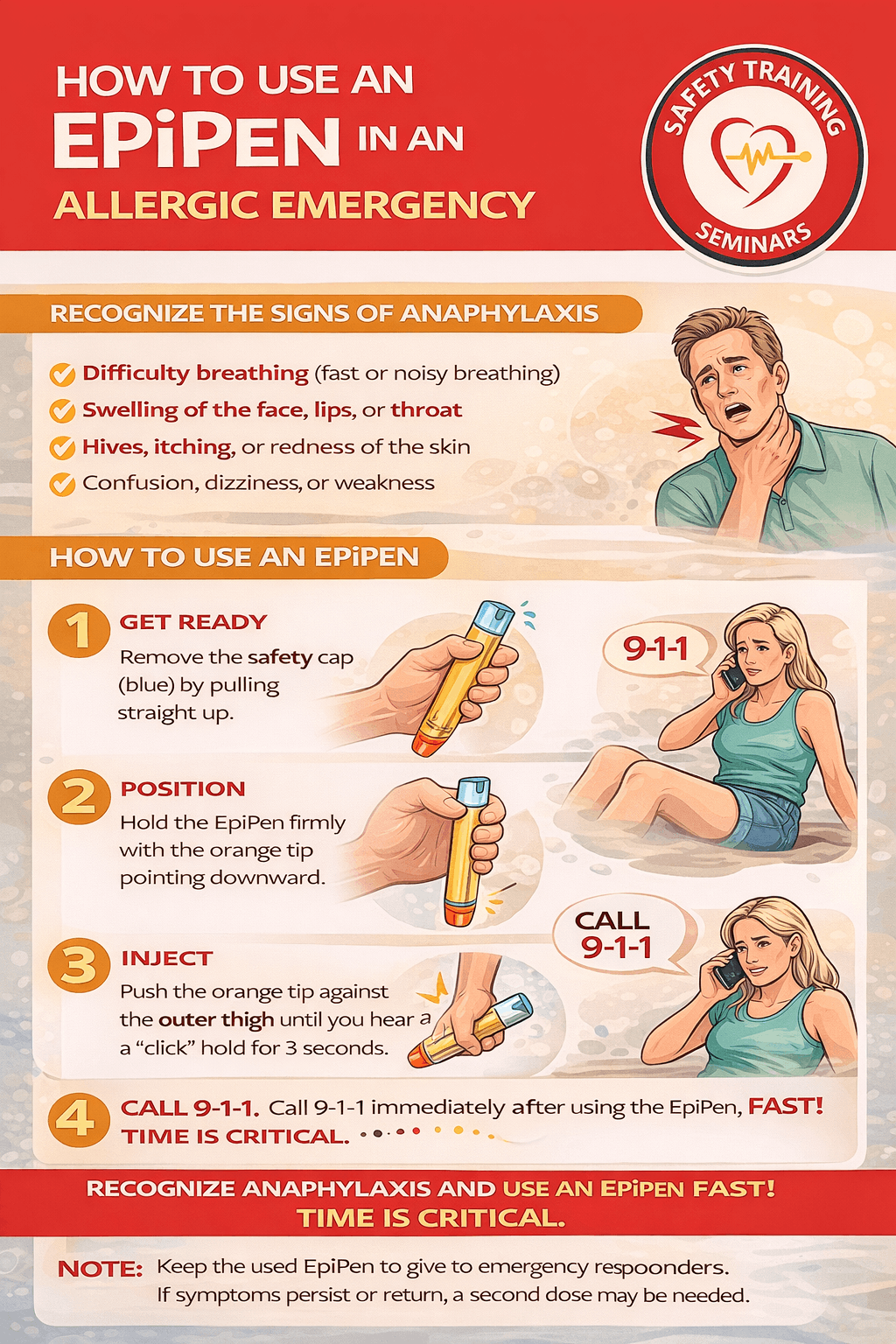
- Swelling of lips, tongue, or throat
- Difficulty breathing or wheezing
- Hives, itching, or flushed skin
- Dizziness, fainting, or rapid heartbeat
- Nausea, vomiting, or abdominal cramps
Being aware of these symptoms ensures that you can respond effectively and demonstrates practical how to save skills in a high-stress scenario.
Ensuring Safety and Preparing for Action
Before administering an EpiPen, ensure the environment is safe. Immediate care is necessary, but personal safety and preparedness are critical for effective response.
Preparation steps include:
- Checking that the victim is in a safe location
- Having the EpiPen and a phone ready to call emergency services
- Ensuring the victim is seated or lying down to prevent falls
- Removing tight clothing around the injection site for easy access
By creating a safe space, you can focus on administering the EpiPen efficiently and providing life-saving First Aid without unnecessary delays.
Step-by-Step Guide to Using an EpiPen
Administering an EpiPen correctly is vital for effectiveness. The device is designed for quick and simple use, but understanding each step ensures proper delivery of epinephrine.
Steps to follow:
- Remove the EpiPen from its protective case.
- Hold it firmly with the orange tip pointing downward.
- Remove the blue safety cap.
- Position the tip against the outer thigh, through clothing if necessary.
- Push the EpiPen firmly until you hear a click, indicating the injection has started.
- Hold the device in place for 3–10 seconds to ensure full delivery of the medication.
- Remove the EpiPen and massage the injection site for 10 seconds.
Administering the EpiPen promptly can reverse severe symptoms and demonstrates exactly how to help someone in an allergic emergency.
Monitoring the Victim After Injection
After administering epinephrine, continuous monitoring is essential. Even after injection, the victim may still require additional care.
Key monitoring steps include:
- Observing breathing and pulse closely
- Keeping the person calm and lying down
- Watching for recurring symptoms or deterioration
- Being prepared to administer a second dose if symptoms persist and another EpiPen is available
- Providing reassurance and emotional support until emergency services arrive
Effective monitoring ensures stability and illustrates how BLS and First Aid knowledge supports survival after initial intervention.
When to Call Emergency Services
Even if the EpiPen appears to relieve symptoms, professional medical care is critical. Anaphylaxis can recur, and additional interventions may be necessary.
Reasons to call emergency services:
- The victim is unconscious or unresponsive
- Symptoms do not improve within minutes after epinephrine injection
- Breathing difficulties persist or worsen
- Multiple doses are required due to ongoing reaction
Calling for professional assistance ensures comprehensive care and reinforces the importance of knowing how to save lives in high-risk emergencies.
Understanding Risk Factors for Severe Allergic Reactions
Awareness of risk factors can improve preparedness and reduce response time in an emergency. Common risk factors include:
- History of previous anaphylaxis
- Known allergies to foods, medications, or insect stings
- Asthma or other respiratory conditions
- Delayed recognition of symptoms
Being mindful of these factors encourages vigilance and ensures rapid response. Training in First Aid, CPR, and BLS equips individuals to act decisively when seconds matter.
Educating Communities on Epinephrine Use
Public education is critical to improving survival in allergic emergencies. Teaching people how to help and how to use an EpiPen builds confidence and saves lives.
Benefits of community training include:
- Increasing immediate response rates in anaphylaxis emergencies
- Reducing fear or hesitation among bystanders
- Promoting awareness of risk factors and preventive measures
- Creating safer environments in schools, workplaces, and public areas
By educating communities, more lives can be saved, and bystanders become empowered responders in life-threatening situations.
Final Thoughts: Quick Action Can Save a Life
Severe allergic reactions require immediate recognition and swift intervention. Administering an EpiPen promptly, monitoring the victim, and seeking professional care are all critical steps in ensuring survival.
Safety Training Seminars equips participants with hands-on skills to respond effectively in allergic emergencies. Knowing how to help someone in crisis transforms ordinary bystanders into life-saving responders. Quick action, confidence, and preparedness can make all the difference in an emergency.