Sacramento loses people every year to cardiac events that happen in ordinary places — a Midtown restaurant kitchen, a State Capitol office, a youth soccer field near Land Park. In most of those moments, paramedics aren’t the first line of defense. A coworker, a teacher, a stranger standing nearby is. That’s the entire reason a CPR and First-Aid Certification Course matters more than most people realize until they need it.
If you’ve searched for certification because your job requires it, your school program is starting clinicals, or you just want to know what to do if someone collapses in front of you, you’re in the right place. This guide walks through what certification actually involves, who needs it, and where to get it in Sacramento.
Quick Answer
Sacramento residents can get AHA-certified in CPR, BLS, ACLS, PALS, or First Aid through Safety Training Seminars, with classes that combine short online modules with an in-person skills check. Most students finish the same day and walk out with a certification card that’s valid for two years and accepted by hospitals, clinics, and employers throughout Sacramento County.
| Feature | Details |
| Certifying Body | American Heart Association (AHA) |
| Certification Validity | 2 years |
| Class Format | Online modules + in-person skills testing |
| Same-Day Certification | Yes |
| Evening & Weekend Options | Yes |
| Accepted By | Hospitals, clinics, schools, employers |
Why It Matters in Sacramento
Sacramento’s healthcare footprint is bigger than most people expect for a state capital. UC Davis Medical Center anchors one of the region’s busiest trauma systems, and Sutter Medical Center and Mercy General Hospital both draw large clinical staffs from across the metro area. Add in the nursing and allied-health programs tied to Sacramento State, and you get a city where thousands of people need current CPR or BLS documentation just to keep working or finish a clinical rotation.
It’s not only a healthcare-worker issue, though. Sacramento’s downtown and Midtown grids stay busy with state employees, restaurant staff, and event crowds heading to Golden 1 Center or Sutter’s Fort. Cardiac events don’t check a calendar. The American Heart Association notes that immediate bystander CPR can significantly improve a person’s odds of surviving cardiac arrest before paramedics arrive — which is exactly the gap a CPR and First-Aid Certification Course is meant to close.
Picture a nursing student at Sacramento State who gets a clinical placement notice with ten days’ notice. Her program won’t let her start without a current BLS card. Or a Midtown restaurant manager who wants every shift lead trained after a customer had a medical scare during dinner service. Both end up looking for the same thing: a certification course that’s fast, legitimate, and close by.
Top Benefits of Getting Certified Locally
- Same-day cards. You don’t wait a week for a card to arrive in the mail — most students leave with their certification the day they finish skills testing.
- Flexible scheduling. Morning, evening, and weekend sessions make it possible to get certified around a shift schedule or class load.
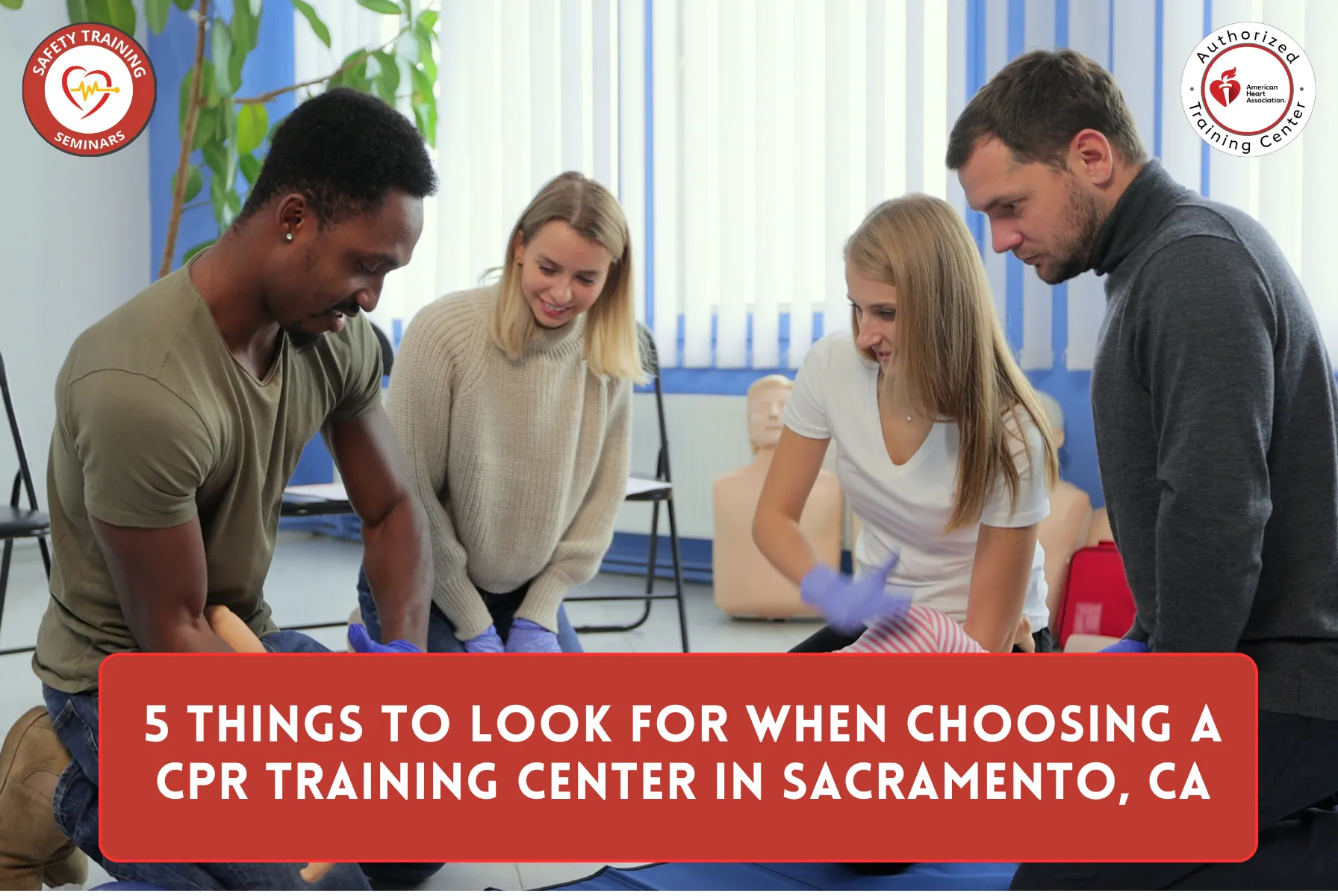
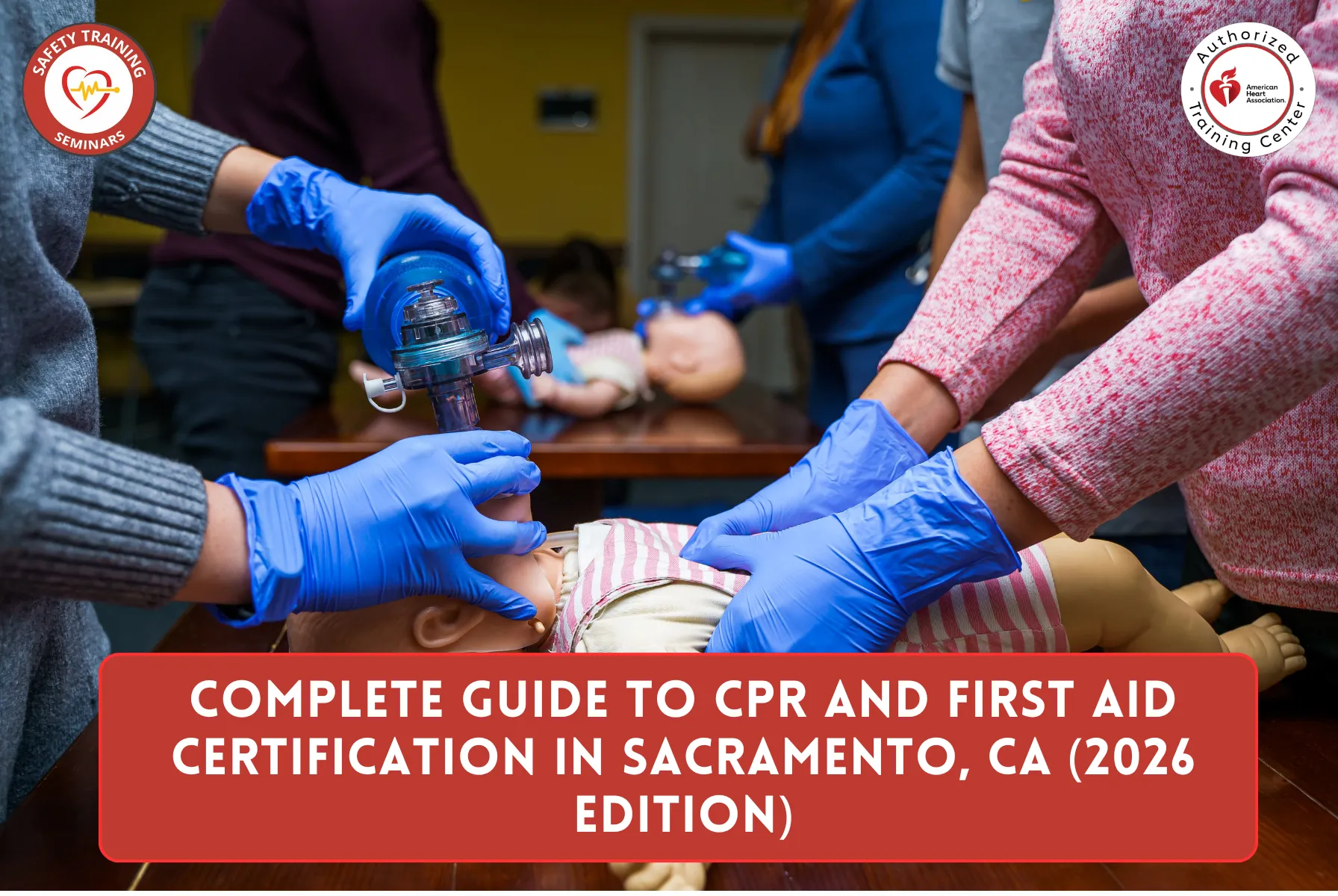
- Hands-on instruction. Feedback manikins and instructor-led skills checks mean you’re actually practicing compressions, AED use, and rescue breathing — not just watching a video.
- Recognized certification. AHA-issued cards are accepted by hospitals, clinics, nursing schools, dental offices, and employers throughout Sacramento County.
- Low price guarantee. Sacramento-area courses are priced competitively, with current promotions occasionally available for BLS, ACLS, and PALS classes.
Nearby Hospitals and Healthcare Employers
The training center sits near Capitol Avenue and 25th Street, close enough to Sacramento’s medical corridor that many students schedule a class around a shift. Nurses and clinical staff connected to UC Davis Medical Center, Sutter Medical Center, and Mercy General Hospital often need current BLS documentation on file, and renewing locally means less travel time between work and training. Home health agencies, dental offices, and long-term care facilities throughout the region also require staff to carry valid CPR or BLS cards, and local certification keeps that paperwork current without a lot of extra hassle.
Nearby Schools and Training Programs
Students in Sacramento State’s health and kinesiology programs, along with those working toward clinical placements through regional nursing programs, frequently need proof of certification before starting hands-on coursework. Because the training center is easy to reach from Highway 50 and I-5, students commuting from East Sacramento, Land Park, or Elk Grove can fit a class into a single afternoon between coursework and part-time jobs. Free parking and nearby public transit options make it manageable even without a car.
Course Overview: What to Expect
Whether you’re taking BLS, CPR & First Aid, ACLS, or PALS, the format follows a similar pattern:
- Complete short online learning modules covering the core concepts at your own pace.
- Attend an in-person skills session where an instructor walks you through hands-on practice.
- Practice adult, child, and infant CPR technique, along with AED operation and choking response.
- Work through team-based, multi-rescuer scenarios if you’re taking BLS or a healthcare-focused course.
- Pass a skills evaluation and receive your AHA certification card the same day.
BLS-focused courses go further than general CPR training, adding airway management and rescue breathing techniques built for healthcare settings. ACLS and PALS students build on that foundation with rhythm recognition, medication protocols, and pediatric-specific emergency response for those working in more advanced clinical roles.
Who Should Take This Course?
- Nurses and nursing students need current BLS certification before starting or continuing clinical work.
- EMTs and medical assistants rely on certification to meet employer and licensing requirements.
- Dental staff and dental hygienists are frequently required to carry current CPR documentation.
- Teachers and childcare providers benefit from First Aid and CPR training given how much time they spend supervising children.
- Coaches and personal trainers deal with cramps, falls, and occasional cardiac events during physical activity.
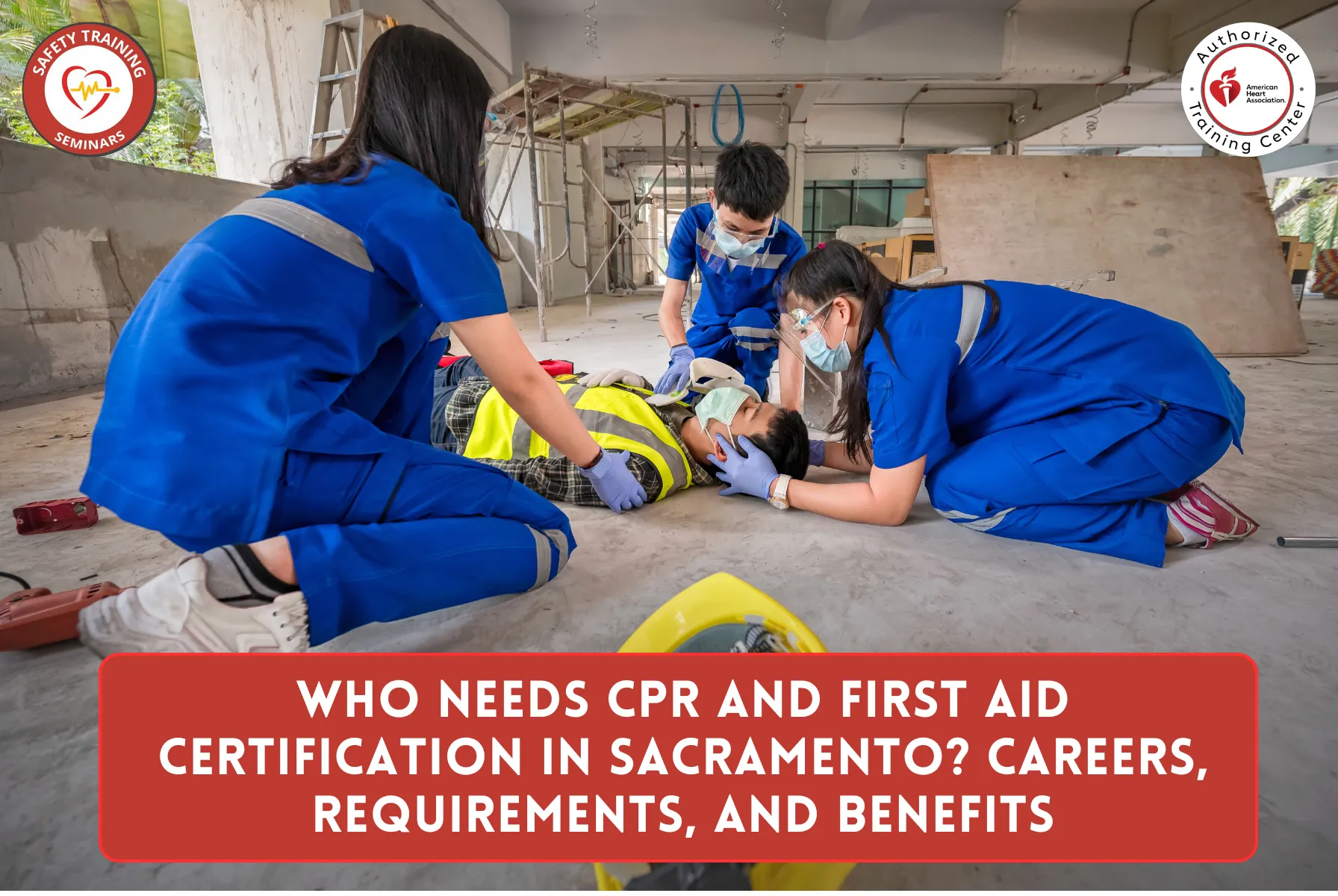
- Security staff and workplace responders are often the first people on scene during an office or facility emergency.
Frequently Asked Questions
How long does a CPR and First-Aid Certification Course take to complete? Most students finish online modules in one to two hours, followed by a skills testing session that typically runs 30 minutes to an hour.
Is the certification accepted at Sacramento-area hospitals? Yes. AHA certification is accepted by UC Davis Medical Center, Sutter Medical Center, Mercy General Hospital, and most clinics and long-term care facilities in the region.
Can I get certified without any prior CPR experience? Yes. Courses are built for all experience levels, from first-time students to healthcare professionals renewing an existing card.
What happens if my certification has already expired? You can still take a renewal course. Most students simply complete the updated coursework rather than starting over.
Do nursing or allied-health students need a different course than the general public? Nursing and healthcare students typically need BLS certification, which includes additional airway and team-response skills beyond general CPR and First Aid training.
Is parking available near the training location? Yes. The training center near Capitol Avenue offers convenient parking, and it’s accessible from both Highway 50 and I-5.
Can employers set up group certification for staff? Yes. Group and onsite training options are available for offices, clinics, and businesses that need to certify multiple employees at once.
Get Certified in Sacramento
Certification isn’t something to put off until the week before a deadline. Whether you’re renewing a card your employer requires, prepping for a clinical rotation, or just want to know what to do if someone collapses near you, a CPR and First-Aid Certification Course gives you real, practiced skills instead of a false sense of readiness.
Sacramento’s training center makes it simple to get there: flexible scheduling, hands-on instruction near Capitol Avenue, and a certification card issued the same day you finish. Reach out to book a class time that fits your schedule and get certified before the week is out.