Infants depend entirely on adults for survival, especially during emergencies. When an infant suddenly stops breathing or loses a pulse, panic can spread quickly. However, panic never saves lives—training does. In a BLS class, students learn how coordinated teamwork can dramatically improve outcomes during infant cardiac emergencies. Two-person CPR allows rescuers to share tasks, reduce fatigue, and deliver high-quality care. As a result, it becomes one of the most effective ways to help an infant in distress.
At Safety Training Seminars, BLS courses focus on real-world readiness. This educational guide explains how two-person CPR on an infant works, why it matters, and how proper coordination improves how to save a life when every moment counts.
Understanding Infant CPR in a BLS Class Setting
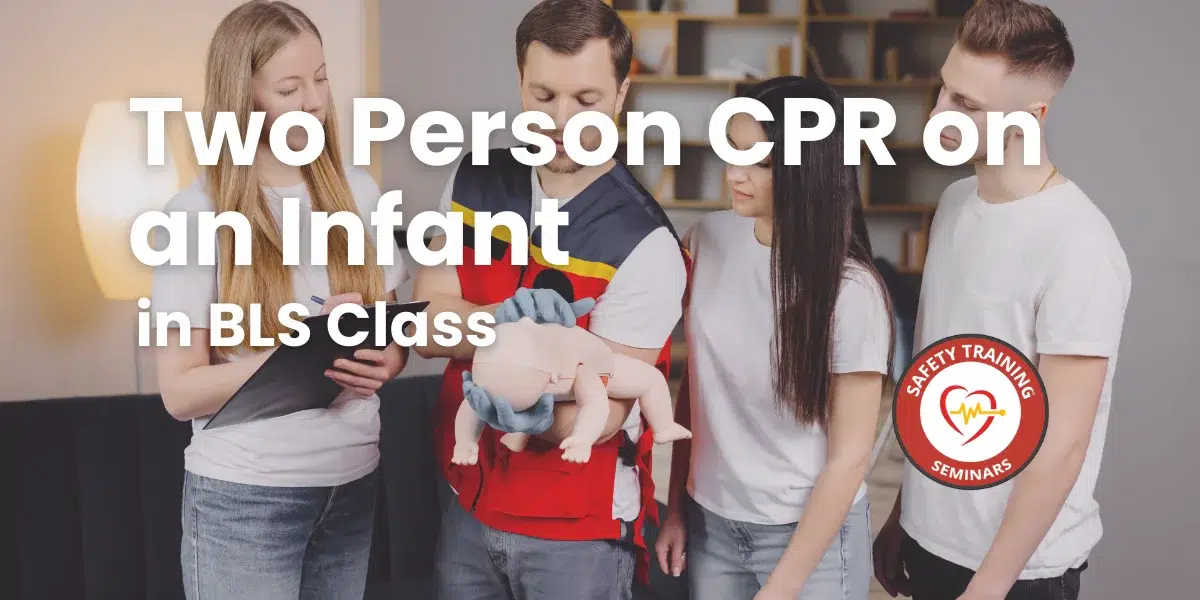
Infant CPR differs significantly from adult and child CPR because infants have smaller airways, more delicate anatomy, and faster heart rates. Therefore, BLS training emphasizes gentle precision rather than force. Two-person CPR allows one rescuer to focus on chest compressions while the other manages ventilation and coordination.
In a structured BLS class, students practice these roles repeatedly so actions become automatic. This teamwork ensures continuous care with minimal interruptions. Most importantly, learning this skill empowers caregivers, healthcare providers, and parents to confidently provide First Aid, CPR, and life-saving support when it matters most.
Key principles emphasized in training include:
- Maintaining consistent compressions
- Delivering effective breaths
- Communicating clearly between rescuers
- Monitoring infant response continuously
Recognizing When an Infant Needs CPR
Before CPR begins, rescuers must recognize the emergency. In a BLS class, students learn to assess infants quickly without wasting time. An infant may require CPR if they are unresponsive, not breathing normally, or only gasping.
Because infants cannot communicate distress, visual and tactile signs become critical. Early recognition significantly increases survival and shows exactly how to help before irreversible damage occurs.
Common warning signs include:
- No response to tapping or shouting
- No breathing or irregular gasps
- Pale, bluish, or gray skin tone
- Limp body or poor muscle tone
Once these signs appear, immediate action is essential. Two rescuers working together can activate emergency response while beginning CPR without delay.
Positioning and Role Assignment in Two-Person CPR
Effective two-person CPR starts with clear role assignment. In a BLS course, instructors teach rescuers to communicate quickly and take responsibility without confusion. One rescuer positions themselves at the infant’s chest, while the second rescuer moves to the infant’s head.
Proper positioning ensures comfort, control, and safety for the infant. Additionally, it prevents rescuer fatigue, which can reduce compression quality over time. When both rescuers understand their roles, teamwork becomes seamless.
Typical role responsibilities include:
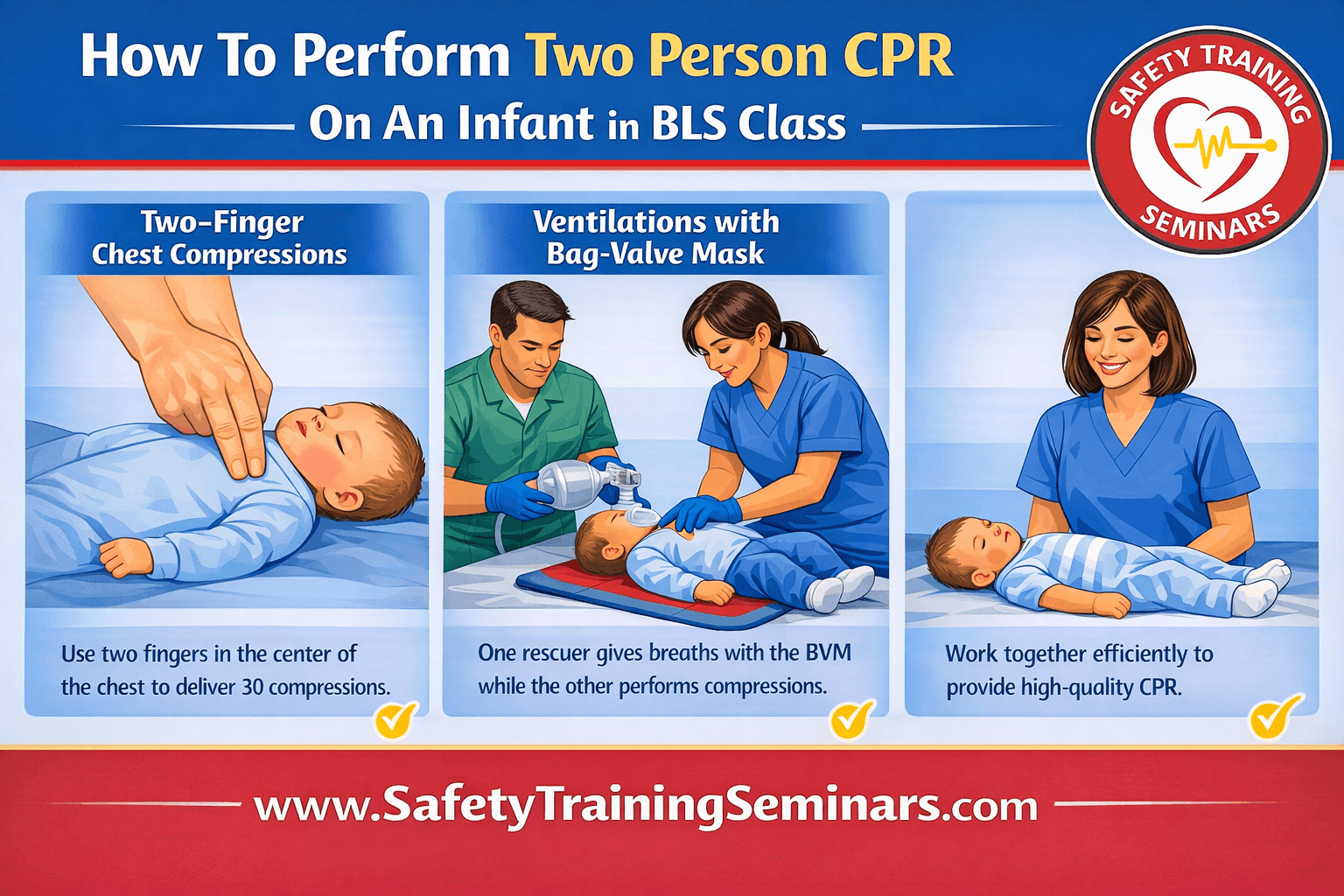
- Rescuer One: Performs chest compressions using two fingers or the two-thumb encircling technique
- Rescuer Two: Maintains airway position and delivers rescue breaths
- Both Rescuers: Communicate rhythm, timing, and infant response
This division of tasks highlights how to save an infant efficiently while maintaining consistent care.
Delivering High-Quality Infant Chest Compressions
Chest compressions form the foundation of infant CPR. In BLS training, students learn that quality matters more than speed alone. Compressions must be smooth, controlled, and deep enough to circulate oxygenated blood without causing injury.
Using two rescuers allows compressions to remain effective for longer periods. When fatigue sets in, rescuers can switch roles smoothly without stopping CPR. This continuity improves outcomes and reinforces proper CPR technique.
Key compression principles include:
- Compressing the center of the chest just below the nipple line
- Using two fingers or thumbs depending on rescuer position
- Allowing full chest recoil after each compression
- Maintaining a steady rhythm without unnecessary pauses
Consistent compressions support vital organs and demonstrate exactly how to help during life-threatening situations.
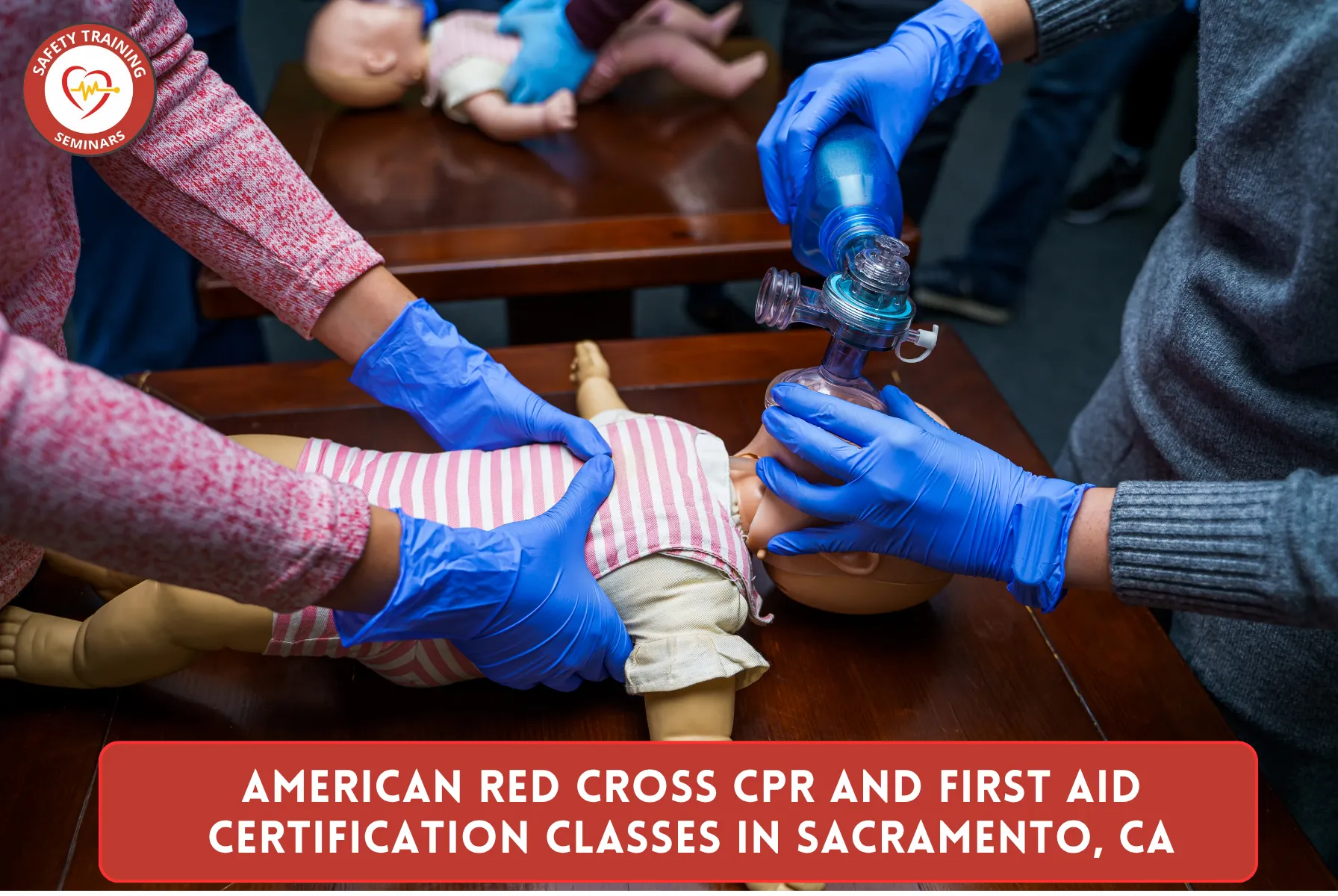
Providing Effective Rescue Breaths to an Infant
While one rescuer performs compressions, the second focuses on ventilation. In a BLS class, students learn that infant breaths must be gentle and controlled. Over-ventilation can cause harm, so precision is essential.
Two-person CPR improves breath delivery because one rescuer maintains the airway while the other focuses solely on compressions. This coordination reduces errors and increases oxygen delivery.
Effective rescue breathing includes:
- Ensuring a proper head-tilt and chin-lift
- Creating a seal over the infant’s mouth and nose
- Delivering slow, gentle breaths
- Watching for visible chest rise
This process ensures oxygen reaches the lungs and bloodstream, supporting circulation created by compressions and reinforcing First Aid fundamentals.
Communication and Coordination Between Rescuers
Clear communication defines successful two-person CPR. In BLS training, students practice verbal cues to stay synchronized. Simple phrases help maintain rhythm and prevent confusion during stressful moments.
When rescuers communicate effectively, transitions become smooth and CPR quality remains high. This teamwork reflects real emergency scenarios where seconds make a difference.
Examples of effective communication include:
- Counting compressions aloud
- Announcing role switches in advance
- Confirming visible chest rise during breaths
- Calling out signs of infant response
Strong coordination shows rescuers how to save a life together rather than working independently.
Monitoring the Infant and Knowing When to Continue
Two-person CPR does not stop until help arrives or the infant shows clear signs of recovery. BLS courses teach rescuers to continuously monitor breathing, movement, and responsiveness without interrupting care.
Watching for improvement ensures rescuers can adjust actions appropriately. If the infant begins breathing normally, CPR pauses while care continues. If not, rescuers remain committed and focused.
Important monitoring indicators include:
- Normal breathing patterns
- Improved skin color
- Spontaneous movement or crying
- Detectable pulse with effective breathing
Understanding these signs teaches how to help safely without premature stopping or unnecessary delays.
Why Two-Person CPR Is Emphasized in BLS Training
BLS programs highlight two-person CPR because it improves performance, accuracy, and endurance. Fatigue can reduce compression depth and ventilation quality when one rescuer works alone. With two trained individuals, care remains consistent and effective.
Safety Training Seminars incorporates hands-on practice so students build confidence through repetition. This preparation ensures responders can act decisively in real emergencies, applying CPR, BLS, and First Aid skills with precision.
Benefits of two-person CPR include:
- Reduced rescuer fatigue
- Improved compression consistency
- Better airway management
- Faster emergency response activation
These advantages explain why BLS courses prioritize teamwork in infant emergencies.
Confidence Through Training Saves Lives
Knowledge alone is not enough during emergencies—confidence transforms knowledge into action. A BLS class provides structured learning, guided practice, and real-world simulations that prepare rescuers to act without hesitation.
When caregivers understand how to save an infant using two-person CPR, fear gives way to focus. That confidence can be the difference between life and loss. Education empowers individuals to respond calmly, communicate clearly, and provide meaningful help when it matters most.
At Safety Training Seminars, the mission is simple: equip people with the skills they need to help, protect, and save lives through effective CPR and emergency care training.