Tick bites are more than just a nuisance—they can transmit dangerous diseases such as Lyme disease, Rocky Mountain spotted fever, and other bacterial infections. Knowing how to help a tick bite victim promptly is critical to reducing complications and ensuring effective recovery.
Immediate First Aid can make a significant difference. While most tick bites are not life-threatening, proper care and monitoring help prevent infections, limit tissue irritation, and provide essential guidance on how to save someone from long-term health issues.
Identifying Tick Bites and Symptoms
Recognizing a tick bite quickly is key to preventing disease transmission. Ticks are small, often difficult to see, and can attach to areas like the scalp, armpits, and behind knees.
Common signs of a tick bite include:
- Small red bump or rash at the bite site
- Itching, irritation, or mild swelling
- Fever, fatigue, or headache in some cases
- Circular “bull’s-eye” rash, often indicative of Lyme disease
By identifying these symptoms early, responders can administer First Aid, monitor vital signs if needed, and educate the victim on when to seek professional medical care.
Safe Tick Removal Techniques
Improper removal of a tick can increase the risk of infection. Knowing the correct First Aid methods is essential to minimize harm.
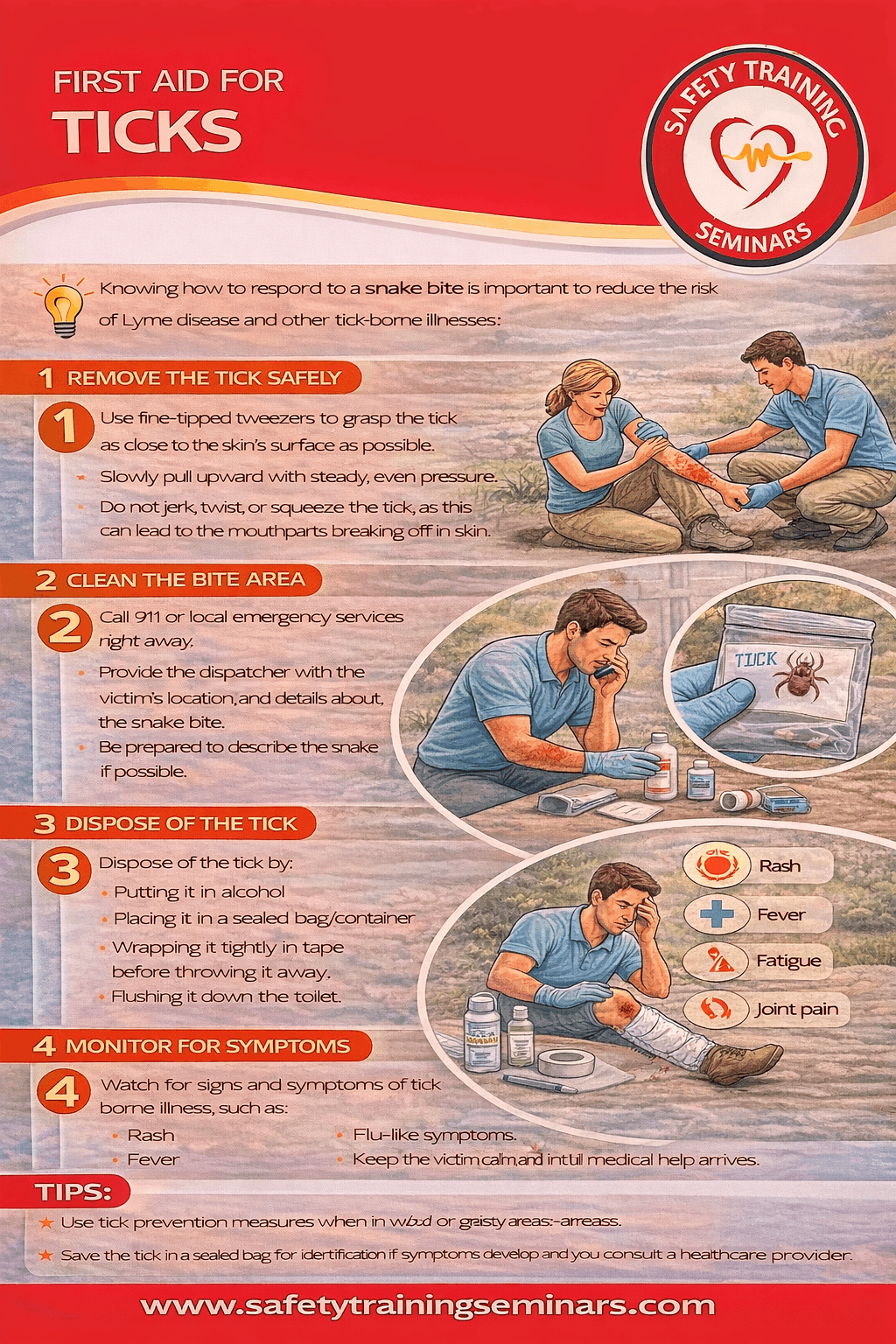
Steps for safe removal:
- Use fine-tipped tweezers to grasp the tick as close to the skin as possible.
- Pull the tick upward steadily and evenly without twisting or jerking.
- Avoid crushing the tick with fingers, which may release bacteria.
- Clean the bite area thoroughly with soap and water, antiseptic, or rubbing alcohol.
- Dispose of the tick safely by placing it in a sealed container or flushing it.
These steps show how to help effectively while reducing the risk of disease transmission.
Monitoring for Complications After a Tick Bite
After the tick is removed, monitoring the victim for signs of infection or complications is vital. Early detection of disease symptoms improves outcomes significantly.
Key points to watch for:
- Redness, swelling, or increased pain at the bite site
- Rash or unusual skin changes
- Fever, chills, or body aches
- Neurological symptoms such as facial drooping or numbness
If any concerning signs appear, medical attention is required immediately. Responders should be prepared to provide BLS or CPR if the victim becomes unresponsive due to severe allergic reactions or complications.
Preventing Tick Bites and Reducing Risk
Prevention is an essential part of First Aid strategy. Understanding how to protect oneself and others decreases the likelihood of bites and potential infections.
Preventive measures include:
- Wearing long sleeves, pants, and closed shoes in tick-prone areas
- Applying insect repellent containing DEET or permethrin
- Conducting regular skin checks after outdoor activities
- Keeping grass and brush trimmed around living spaces
- Educating family and community on tick awareness
By taking these preventive steps, you learn how to help others avoid tick-related injuries and how to save lives through awareness and vigilance.
Educating Yourself for Tick Emergencies
Being prepared for tick emergencies requires knowledge, tools, and confidence. Attending First Aid, CPR, and BLS courses equips you with skills to act decisively and safely in any medical situation.
Preparation tips include:
- Keep a tick removal kit in your first-aid supplies
- Familiarize yourself with local tick species and their associated diseases
- Learn proper immobilization, monitoring, and symptom recognition
- Educate friends and family on safe outdoor practices
- Stay calm and organized during emergencies to ensure effective response
Preparedness enhances your ability to how to help immediately and increases your chances of how to save someone from infection or complications.
Follow-Up Care After a Tick Bite
After administering immediate First Aid, follow-up care is essential to ensure proper healing and detect any delayed symptoms of disease.
Steps for follow-up care:
- Keep the bite area clean and dry
- Monitor the victim for any delayed signs of infection
- Encourage the victim to consult a healthcare professional for tick-borne disease testing
- Provide education on recognizing early warning signs in the days and weeks following a bite
- Document the tick bite details for medical records if professional care is required
Effective follow-up ensures that victims are protected, informed, and recover safely, highlighting how to help with both immediate and long-term care.
Final Thoughts: Quick Action Saves Lives
Tick bites can lead to serious health problems if not handled correctly. Quick identification, safe removal, monitoring for complications, and preventive education are key steps to ensure victim safety.
At Safety Training Seminars, we emphasize hands-on First Aid, CPR, and BLS training to empower individuals. Knowing how to help and how to save lives in emergencies builds confidence and ensures that you can act effectively when seconds matter.