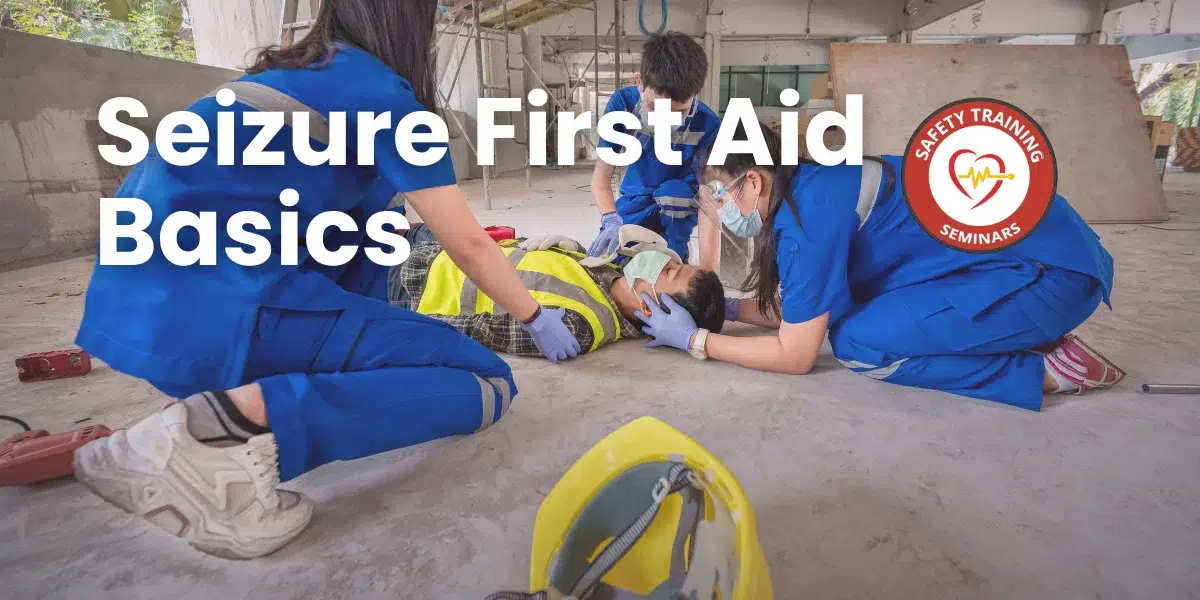
Seizures can be sudden, frightening, and unpredictable. They occur when the brain experiences abnormal electrical activity, temporarily affecting movement, awareness, or consciousness. While most seizures are brief and self-limiting, some can be life-threatening, particularly if they last too long or occur in dangerous environments. Knowing how to help someone having a seizure is a critical life skill.
At Safety Training Seminars, BLS and First Aid courses emphasize the importance of rapid, safe, and effective intervention. Acting promptly can prevent injuries, maintain breathing, and stabilize the person until professional help arrives. Understanding the basics of seizure response empowers bystanders to take confident action and increases the chance to save a life.
Step One: Ensure Safety for Both the Person and Rescuer
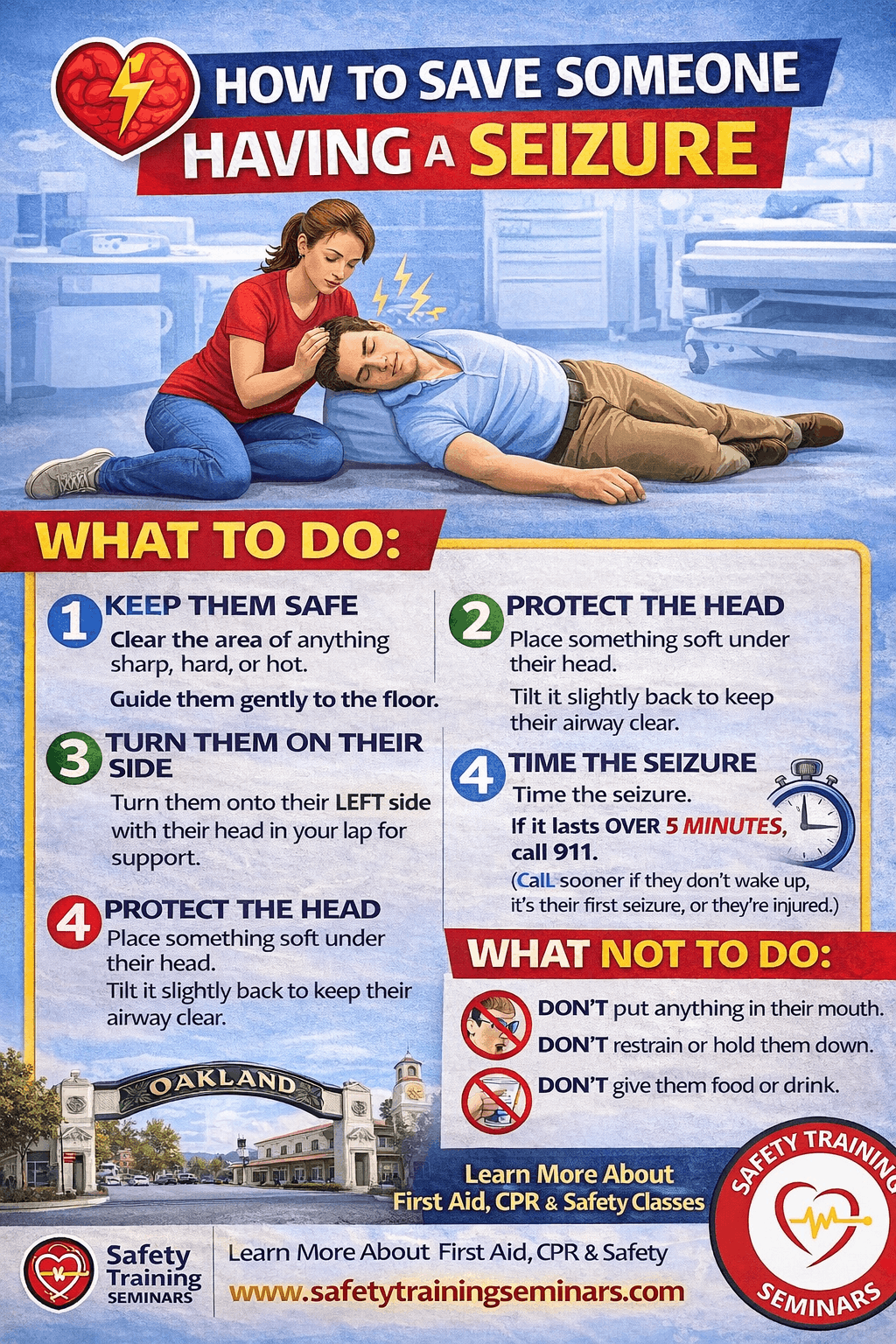
Before attempting to help, it’s essential to secure the environment. Objects, furniture, or sharp edges can cause injuries during uncontrolled movements. Always approach calmly and quickly assess for hazards.
Key safety steps include:
- Clear the area of furniture, sharp objects, or obstacles
- Protect the person from falling or hitting dangerous surfaces
- Avoid restraining the person’s movements forcefully
- Keep bystanders at a safe distance
Creating a safe space reduces the risk of injury and allows you to focus on monitoring the person, demonstrating how to help effectively without adding risk.
Positioning During a Seizure
Once the area is safe, positioning the person properly is vital to reduce complications. Although you should not try to hold someone down, certain postures can protect their airway and prevent aspiration.
Helpful positioning steps:
- Gently turn the person onto their side (recovery position) if possible
- Tilt the head slightly back to keep the airway open
- Place a soft object, like a folded jacket, under their head to prevent injury
- Loosen tight clothing around the neck and chest
These steps protect vital functions and allow the person to recover safely. Proper positioning is a foundational part of First Aid, BLS, and emergency care.
Protecting the Person From Injury
During a seizure, uncontrolled movements are common and can lead to bruises, cuts, or broken bones. Your role is to prevent harm without restricting natural movements.
Key protective actions include:
- Remove nearby hard or sharp objects
- Do not attempt to forcefully hold limbs down
- Cushion the head and limbs with soft clothing if needed
- Stay calm and provide reassurance through tone, even if they cannot respond
These measures allow the seizure to run its course while minimizing risks, which is crucial in knowing how to save someone from additional injury.
Monitoring Duration and Breathing
Seizures generally last a few seconds to a few minutes. Continuous monitoring is essential. If a seizure lasts longer than five minutes or repeats without recovery, emergency help should be activated immediately.
Monitoring tips:
- Note the start and end times of the seizure
- Observe breathing and responsiveness
- Watch for signs of injury or unusual behavior
- Be prepared to administer CPR if breathing stops
Being attentive ensures that critical interventions happen without delay, reinforcing the importance of BLS knowledge alongside First Aid skills.
Supporting Recovery After the Seizure
Once the seizure ends, the person may be confused, drowsy, or disoriented. Post-seizure care is as important as care during the episode.
Recovery support includes:
- Keep the person lying on their side for continued airway protection
- Provide reassurance and calm words
- Offer water if fully conscious and alert
- Allow them to rest until fully recovered
- Do not give food, drink, or medications until fully aware
These actions help stabilize the person and prevent secondary complications, showing practical ways how to help someone regain stability safely.
When to Seek Emergency Help
While many seizures stop on their own, certain situations require immediate medical attention. Recognizing these situations is critical for anyone trained in First Aid or BLS.
Call for professional help if:
- The seizure lasts more than five minutes
- Breathing stops or becomes irregular
- The person remains unconscious after the seizure
- Multiple seizures occur without recovery
- There are injuries from the seizure or underlying medical conditions
Prompt medical intervention can prevent complications and ensure long-term safety.
Integrating Seizure Care Into First Aid and BLS Skills
Seizure response is a key part of emergency preparedness. It overlaps with CPR and BLS knowledge because some seizures may require airway support or resuscitation. Learning how to combine these skills ensures that responders can act confidently and efficiently in high-stress situations.
Training emphasizes:
- Recognizing life-threatening complications
- Maintaining an open airway
- Assessing breathing and circulation
- Preparing to provide CPR if necessary
- Coordinating with emergency services effectively
This integrated approach illustrates exactly how to save lives in real-world emergencies.
Educating Communities to Respond Effectively
Seizure emergencies can happen anywhere—home, school, workplace, or public spaces. Educating the public in First Aid and BLS empowers communities to act decisively. Awareness reduces fear, prevents panic, and promotes effective intervention.
Key community benefits of seizure training:
- Increased confidence among bystanders
- Reduced injuries and complications
- Faster emergency response activation
- A culture of safety and preparedness
Understanding seizure management equips individuals with the knowledge to respond calmly and effectively, highlighting the life-saving impact of education.
Final Thoughts: Stay Calm, Be Ready, Save Lives
Helping someone having a seizure requires calmness, preparedness, and practical skills. By maintaining safety, protecting the person, monitoring breathing, and supporting recovery, you can make a critical difference. Combining First Aid, CPR, and BLS training ensures that responders are ready for any situation.
At Safety Training Seminars, courses are designed to provide hands-on, practical experience. Knowing how to help during a seizure empowers you to act with confidence, protect the person, and potentially save a life. Education is the first step toward preparedness, and readiness can turn fear into action when it matters most.