A stroke occurs when blood flow to a part of the brain is interrupted, either by a clot or a ruptured blood vessel. This deprives brain cells of oxygen and nutrients, causing rapid cell death. Recognizing a stroke quickly is crucial because every minute without proper care increases the risk of permanent disability or death. Knowing how to help someone experiencing a stroke is a critical skill that can directly influence outcomes.
At Safety Training Seminars, First Aid, CPR, and BLS courses emphasize early recognition and swift action. By understanding stroke symptoms and appropriate responses, you can take immediate steps to stabilize the person and ensure professional medical assistance arrives promptly. Acting quickly is often the difference between recovery and irreversible damage.
Common Signs and Symptoms of a Stroke
Strokes often occur suddenly, and the signs can vary depending on the part of the brain affected. Recognizing these warning signs is the first step in how to save a life.
Key stroke symptoms include:
- Sudden numbness or weakness, especially on one side of the body
- Confusion, trouble speaking, or difficulty understanding speech
- Trouble seeing in one or both eyes
- Difficulty walking, dizziness, loss of balance, or lack of coordination
- Severe sudden headache with no known cause
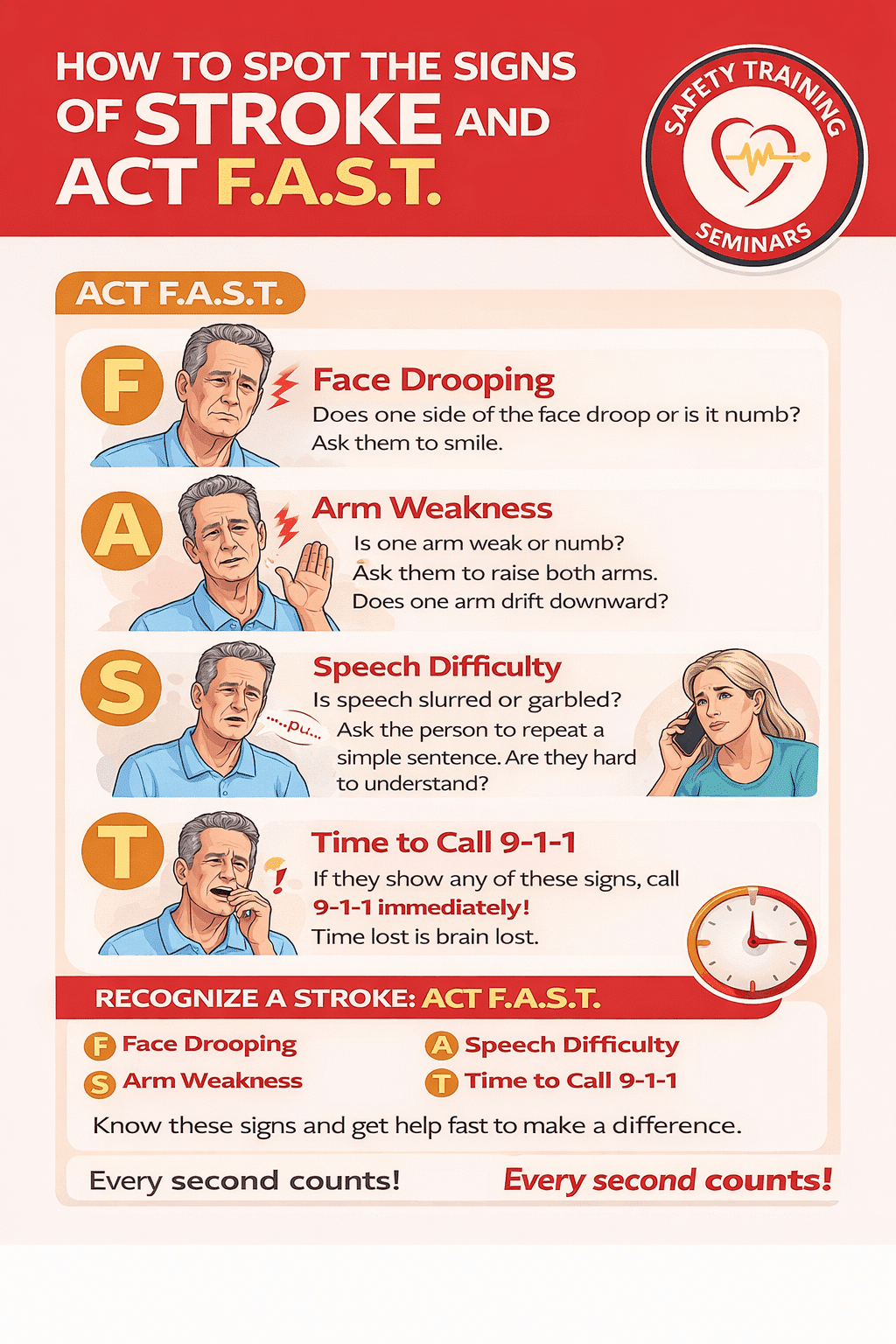
Knowing these signs allows bystanders to act quickly, which is crucial for survival and minimizing long-term effects. Using the FAST method (Face drooping, Arm weakness, Speech difficulty, Time to call emergency services) is a practical way to remember key indicators, though it should be adapted into simple observational steps for immediate action.
Ensuring Safety Before Providing Assistance
Before approaching someone experiencing a stroke, it is important to ensure the environment is safe for both the victim and the responder. Hazards such as traffic, broken glass, or slippery surfaces can make the situation more dangerous.
Safety measures include:
- Quickly scanning the area for immediate dangers
- Moving the person to a safer location if possible
- Avoiding risky maneuvers that could cause further injury
- Preparing to provide First Aid or CPR if needed
By creating a safe space, you can focus on monitoring the person and providing effective care without putting yourself or the victim at risk. This is the first step in demonstrating how to help responsibly during an emergency.
Acting Quickly: Emergency Response Steps
Stroke requires urgent medical attention. While professional help is on the way, certain actions can stabilize the person and prevent complications. Immediate steps include:
- Call emergency services immediately – quick transport to a medical facility is essential
- Keep the person calm and seated or lying down
- Do not give food, drink, or medications unless instructed by a healthcare professional
- Monitor breathing and consciousness, and be ready to provide CPR if necessary
Swift, decisive action increases the likelihood of a positive outcome. BLS and First Aid training teaches how to provide support while waiting for emergency responders, ensuring every moment is used effectively to save a life.
Positioning and Comfort During a Stroke
Proper positioning can improve blood flow and reduce risk of further complications. While a stroke can affect movement and balance, simple adjustments can make a significant difference.
Helpful positioning tips include:
- Keep the person seated with support or lying on their side if there is a risk of vomiting
- Elevate the head slightly to improve breathing and reduce pressure
- Loosen tight clothing around the neck, chest, and waist
- Ensure the person remains still to prevent falls or additional injury
By maintaining comfort and safety, you reduce stress on the person’s body and brain, which is a vital part of how to help in a stroke emergency.
Monitoring and Observing Vital Signs
During a stroke, constant monitoring of vital signs can provide critical information to emergency responders. This includes observing breathing, pulse, consciousness, and any changes in symptoms.
Key monitoring actions include:
- Checking for irregular or labored breathing
- Watching for signs of worsening weakness or confusion
- Noting changes in facial expression, speech, or movement
- Being prepared to administer CPR if the person becomes unresponsive
Monitoring ensures that any deterioration is recognized immediately, allowing prompt intervention and showcasing the practical application of BLS knowledge.
Understanding Risk Factors and Preparedness
Being aware of stroke risk factors can improve response readiness and prevention strategies. Common risk factors include:
- High blood pressure and heart disease
- Diabetes or high cholesterol
- Smoking, excessive alcohol use, or sedentary lifestyle
- Age, family history, and previous strokes
Preparedness involves knowing First Aid, CPR, and BLS principles and having a clear emergency plan. Recognizing high-risk individuals can prompt faster action, reducing the time to professional care and improving outcomes.
Supporting Recovery After the Event
After a stroke, the person may be confused, weak, or frightened. Post-event support is critical while waiting for professional care.
Supportive actions include:
- Providing reassurance and staying calm
- Ensuring the person remains seated or lying safely
- Continuing to monitor breathing and pulse
- Avoiding sudden movements or attempts to make them walk
- Communicating clearly and gently
These steps maintain stability and comfort, demonstrating how BLS and First Aid skills extend beyond the immediate emergency to support recovery.
Educating Communities to Respond Effectively
Stroke emergencies often occur in public or at home, making bystander knowledge vital. Educating communities on recognizing stroke symptoms and responding promptly empowers people to act decisively.
Benefits of community education:
- Faster identification and response to stroke symptoms
- Reduced risk of permanent disability
- Increased confidence among bystanders
- Encouragement of safe and effective First Aid and BLS practices
By teaching communities these skills, more lives can be saved and individuals become active participants in public health safety.
Final Thoughts: Every Second Counts
Recognizing and responding to a stroke requires awareness, confidence, and immediate action. From identifying early warning signs to ensuring safety, providing comfort, and being ready to administer CPR, each step contributes to survival.
At Safety Training Seminars, our courses focus on practical, hands-on skills that equip participants to act effectively in real-life emergencies. Knowing how to help someone having a stroke ensures you can make critical decisions quickly and provide life-saving support. Being prepared turns fear into action and uncertainty into confidence.