Advanced Cardiovascular Life Support (ACLS) is a critical training for healthcare providers, emergency responders, and anyone involved in First Aid, CPR, or BLS procedures. The course equips participants with the knowledge and skills to respond effectively to life-threatening cardiac emergencies.
Preparation is key, as ACLS builds on foundational BLS skills while introducing advanced interventions. Knowing how to help and when to act can be the difference between life and death in emergencies.
Assess Your Current Knowledge and Skills
Before enrolling in an ACLS course, it’s important to evaluate your existing competencies. Understanding your strengths and weaknesses will guide your preparation.
Key areas to assess include:
- Basic CPR and BLS skills, including chest compressions and ventilation
- Knowledge of cardiac rhythms and emergency medications
- Familiarity with First Aid protocols in adults and pediatric cases
- Ability to remain calm and act efficiently under stress
Self-assessment allows participants to focus on areas that require reinforcement, ensuring they are ready to maximize their learning and understand how to save lives.
Gather the Necessary Learning Materials
Proper preparation begins with gathering and reviewing learning resources. A combination of textbooks, online modules, and practice materials provides a solid foundation.
Recommended materials include:
- ACLS manuals and guides covering algorithms, drug protocols, and case studies
- Online practice exams and quizzes to reinforce knowledge
- Videos demonstrating advanced airway management, defibrillation, and team-based CPR
- Notes from previous BLS and First Aid training
Having all necessary materials at hand ensures you can study effectively and confidently, demonstrating practical knowledge of how to help in cardiac emergencies.
Focus on Key ACLS Skills
ACLS courses emphasize advanced techniques beyond basic CPR. Focusing on these skills during preparation helps participants succeed during practical assessments.
Important skills to practice include:
- Advanced airway management techniques, including bag-mask ventilation and intubation
- Recognition and management of cardiac rhythms such as ventricular fibrillation, tachycardia, and asystole
- Use of emergency medications like epinephrine, amiodarone, and adenosine
- Performing high-quality CPR and BLS in coordination with a team
- Effective communication and leadership during resuscitation
By focusing on these areas, participants gain confidence in their ability to act decisively and how to save lives in real emergencies.
Practice Team-Based Scenarios
ACLS emphasizes teamwork and communication in high-stress situations. Practicing simulated scenarios ensures participants can function efficiently during emergencies.
Tips for scenario practice include:
- Collaborate with peers to role-play resuscitation events
- Rotate roles between team leader, compressor, and airway manager
- Focus on clear communication, delegation, and timing of interventions
- Incorporate First Aid, CPR, and BLS steps into realistic emergency simulations
Team-based practice teaches participants how to help effectively while maintaining situational awareness and minimizing errors.
Review ACLS Algorithms Thoroughly
ACLS algorithms provide structured guidance for managing cardiac emergencies. Familiarity with these algorithms improves decision-making during stressful situations.
Key algorithms to review include:
- Adult cardiac arrest algorithm
- Bradycardia and tachycardia management
- Post-resuscitation care
- Emergency medication administration sequences
Understanding these structured approaches allows participants to act quickly, confidently, and safely, which is crucial when learning how to save lives during ACLS scenarios.
Prepare Mentally and Physically
ACLS courses are demanding both mentally and physically. Preparing your mind and body ensures optimal performance during the course.
Consider the following strategies:
- Rest adequately before each training session to maintain focus
- Practice stress management techniques, such as deep breathing or visualization
- Maintain physical fitness for performing compressions and CPR over extended periods
- Develop a confident mindset, understanding that mistakes are part of learning
Mental and physical preparation ensures participants can act decisively, demonstrating how to help under pressure.
Logistics and Administrative Preparation
Being organized can prevent unnecessary stress and ensure full focus on learning.
Steps include:
- Confirm course registration, location, and schedule
- Gather required identification, manuals, and PPE (gloves, masks, etc.)
- Arrive early to familiarize yourself with the training environment
- Review any pre-course assignments or online modules
Administrative preparation reduces distractions, allowing participants to concentrate fully on acquiring skills in BLS, CPR, and First Aid.
Continuous Learning Beyond the Course
ACLS preparation does not stop after attending the course. Continuous practice and review reinforce skills and keep knowledge current.
Suggestions for ongoing learning:
- Participate in refresher courses and simulations
- Review algorithms and protocols regularly
- Practice team-based CPR and BLS skills in drills
- Stay updated with new research and emergency care techniques
Ongoing practice ensures that you always know how to save and are prepared to how to help effectively in real-life emergencies.
Final Thoughts: Being Prepared Saves Lives
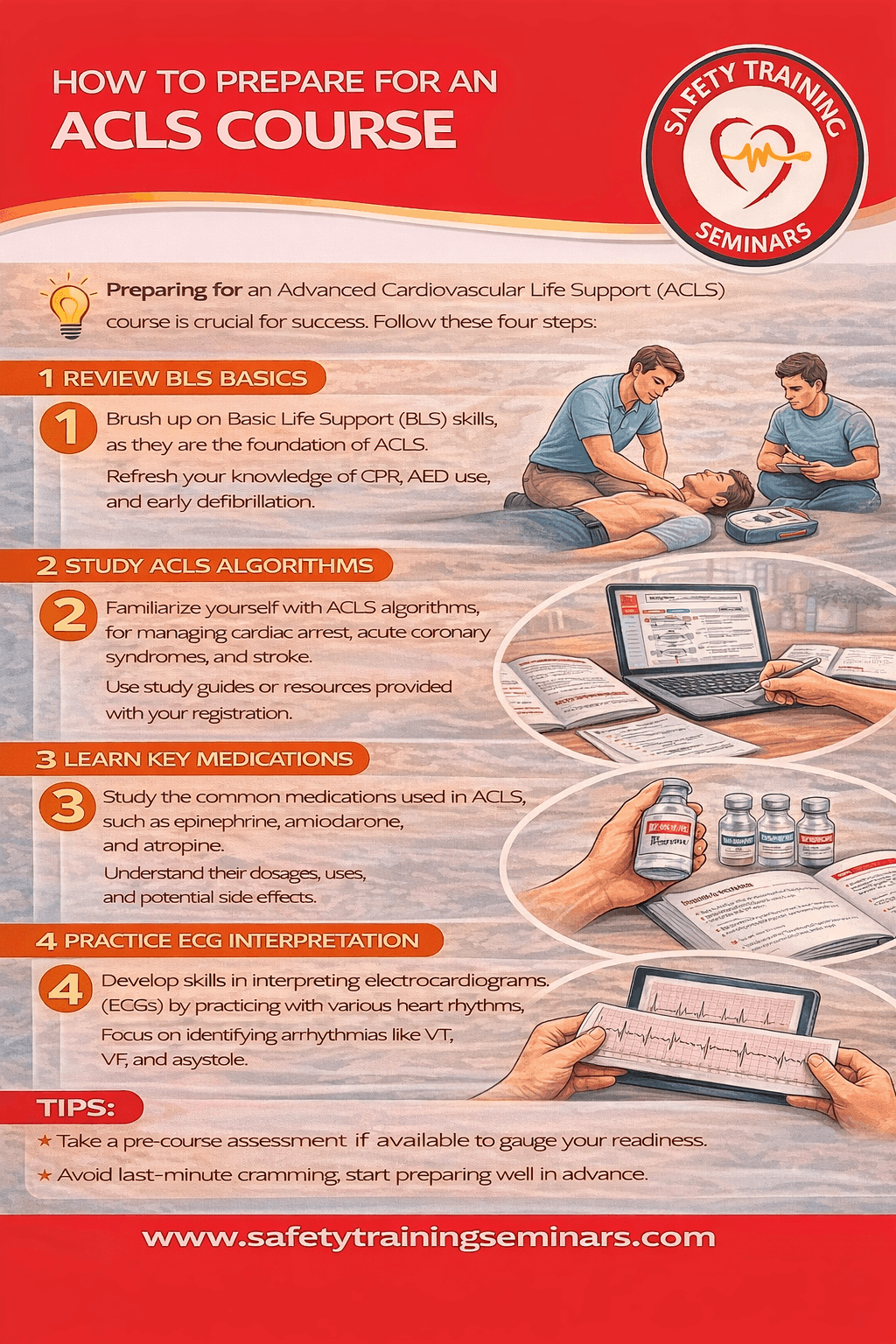
Preparation is the key to success in an ACLS Certification course. By assessing your skills, gathering resources, practicing advanced techniques, and reviewing algorithms, you build confidence and competence.
At Safety Training Seminars, we emphasize thorough preparation to ensure every participant understands how to help in critical emergencies. Proper preparation enhances performance, empowers responders, and ultimately teaches how to save lives when it matters most.