Spider bites can range from harmless to potentially life-threatening, depending on the species involved. Understanding first aid, knowing how to help, and recognizing the warning signs are crucial for protecting yourself and others. In this guide, we will explore practical steps for providing immediate care and ensuring safety after a spider bite.
Understanding Spider Bites
Not all spider bites are dangerous, but some species, such as black widows and brown recluses, can cause severe symptoms. A spider bite usually presents with redness, swelling, pain, and itching. More severe bites may lead to nausea, muscle cramps, or difficulty breathing.
- Most bites occur on the hands or feet.
- Children and elderly individuals are at higher risk of complications.
- Recognizing the type of spider can help medical professionals provide proper treatment.
By understanding the bite’s severity, you can decide whether first aid alone is sufficient or if emergency care is required.
Immediate First Aid Steps
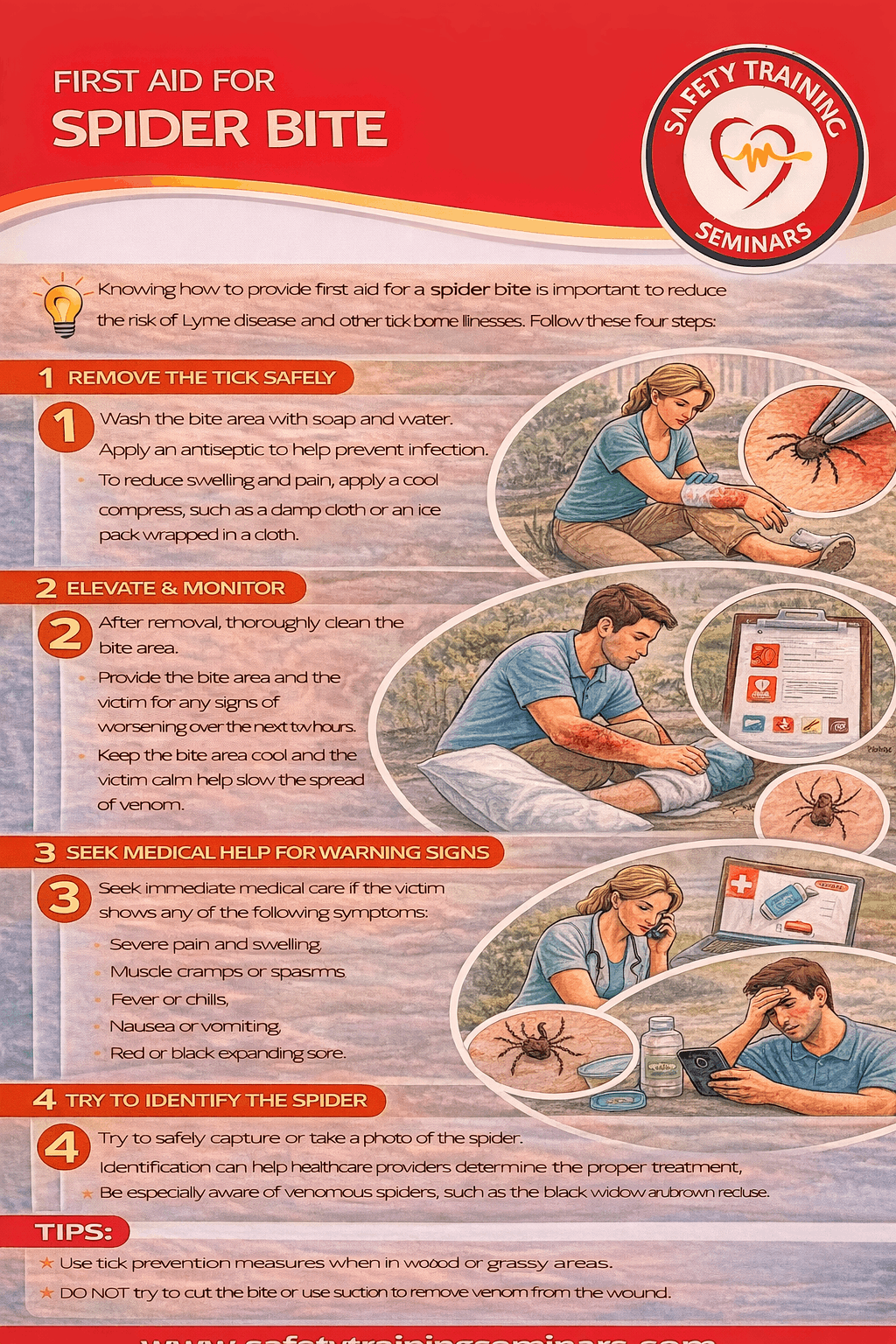
Taking quick action after a spider bite can prevent complications. Here’s how to help safely:
- Clean the bite area with soap and water to reduce infection risk.
- Apply a cold compress to minimize swelling and pain.
- Keep the affected limb elevated if possible to slow the spread of venom.
- Avoid applying heat, as it may worsen tissue damage.
Acting promptly increases comfort and reduces the risk of serious reactions, which is why knowing first aid for spider bites is essential for everyone.
Monitoring for Severe Symptoms
Some spider bites require urgent medical attention. Knowing how to save a life means recognizing red flags early.
- Difficulty breathing or swallowing
- Severe pain at the bite site
- Muscle cramps, abdominal pain, or fever
- Rapid spreading redness or swelling
If any of these symptoms appear, call emergency services immediately. While waiting, stay calm, monitor vital signs, and be ready to provide information about the bite, including the spider type if known.
Pain Relief and Comfort Measures
Managing pain is an important part of spider bite care. Over-the-counter pain relievers like acetaminophen or ibuprofen can help reduce discomfort.
- Avoid scratching the bite, which can lead to infection.
- Use antihistamines if itching or swelling is significant.
- Keep the bite clean and covered with a sterile bandage.
Comfort measures should be combined with vigilant observation to ensure the bite does not progress into a more severe condition.
When to Seek Professional Help
Even minor bites can become serious if complications develop. Seek medical attention if:
- The bite worsens after 24 hours
- Signs of infection appear (pus, increasing redness, warmth)
- Severe symptoms, such as nausea, dizziness, or chest pain, develop
Medical professionals may provide antivenom or other treatments depending on the spider species and the patient’s condition. Understanding how to help someone also means recognizing when professional care is necessary.
Preventing Spider Bites
Prevention is always better than treatment. Taking proactive measures reduces the risk of bites:
- Wear gloves and long sleeves when working in areas prone to spiders
- Keep living spaces clean and free of clutter
- Seal cracks and gaps in windows and doors
- Educate children about avoiding spiders
By implementing these steps, you minimize exposure and the need for first aid interventions.
Combining First Aid with CPR and BLS Knowledge
While most spider bites are not immediately life-threatening, severe allergic reactions or complications can escalate quickly. Knowledge of CPR and BLS (Basic Life Support) can be invaluable if a bite triggers a severe systemic reaction:
- Recognize signs of anaphylaxis or severe shock
- Administer CPR if the victim loses consciousness or stops breathing
- Keep emergency contacts accessible and act swiftly
Being trained in first aid, CPR, and BLS equips you to handle not only spider bites but other emergencies effectively.
Conclusion
Spider bites can be frightening, but prompt first aid, careful monitoring, and knowledge of how to help can make a significant difference. Always act quickly, observe symptoms, and seek medical attention when necessary. Combining preventive measures with emergency preparedness ensures safety for you and those around you.