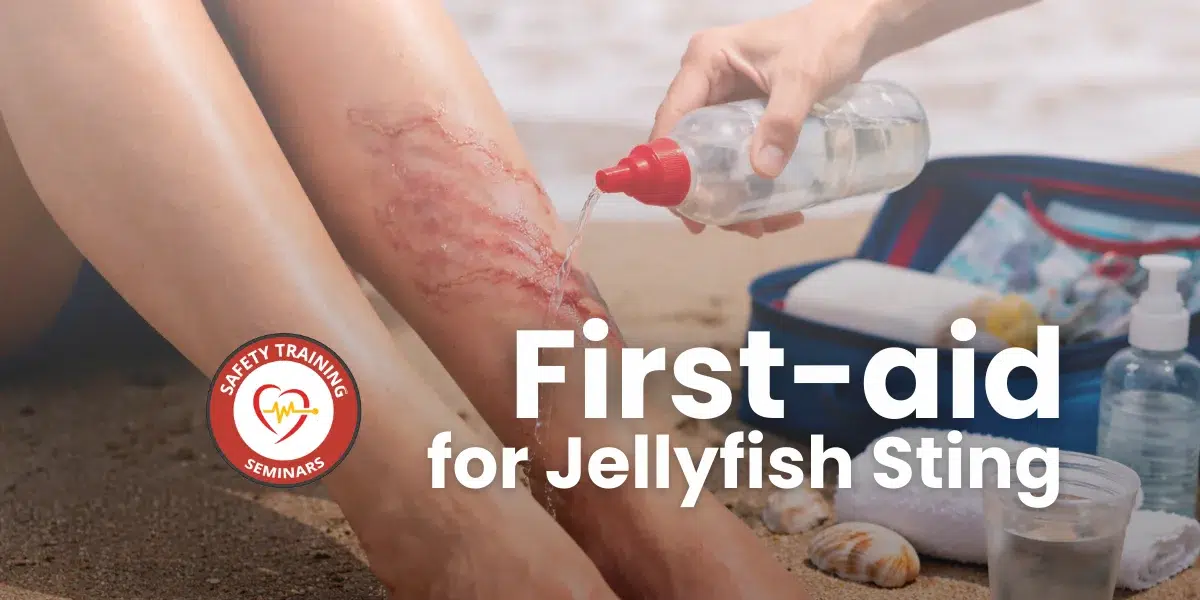
Jellyfish stings strike unexpectedly during ocean adventures, causing intense pain and potential complications that demand swift First Aid action. This guide equips you with proven steps to neutralize venom, ease suffering, and spot dangers, ensuring you know how to save beachgoers from escalating harm. Consequently, arming yourself with this knowledge turns bystanders into lifesavers in coastal crises.
Spotting Jellyfish Sting Symptoms Instantly
Jellyfish deliver venom through tentacles, triggering immediate burning pain, red welts, swelling, and itching at the contact site—symptoms vary by species and exposure. Mild cases manifest as whip-like marks with throbbing; severe ones escalate to nausea, muscle cramps, or breathing difficulty, signaling systemic reaction. Thus, rapid symptom recognition dictates your First Aid urgency.
Victims often panic from shock-like waves of pain, so calm them first while assessing for tentacles still adhering to skin. BLS training enhances this discernment, preparing you to differentiate stings from other marine injuries. By identifying severity early, you intervene effectively to how to help.
Immediate Rinse and Tentacle Removal Tactics
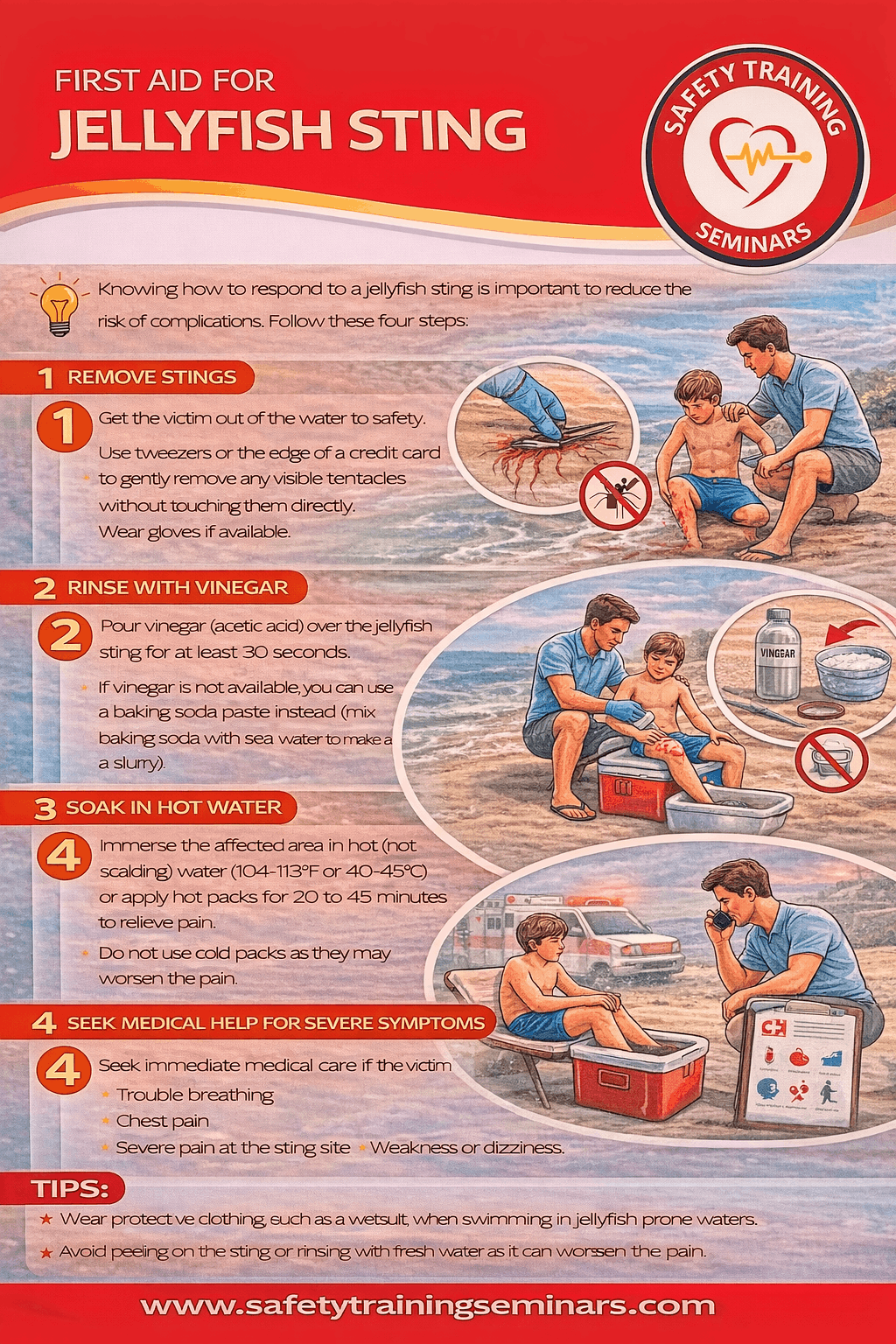
Rinse the affected area immediately with seawater—never freshwater, which triggers more nematocysts to fire—flushing tentacles for 30 seconds minimum. Use gloves, tweezers, or a credit card edge to scrape off visible tentacles gently, avoiding bare hands that risk further stings. Therefore, proper rinsing halts venom spread proactively.
- Pick tentacles carefully to prevent squeezing venom sacs.
- Avoid rubbing, slapping, or pressure that activates undischarged cells.
- For eyes or face, irrigate gently with saline.
This foundational First Aid step, practiced in comprehensive courses, minimizes tissue damage swiftly.
Harnessing Heat Therapy for Pain Neutralization
Immerse the sting site in hot water—110-113°F (43-45°C), hot to touch but not scalding—for 20-45 minutes to denature venom proteins and slash pain by up to 90%. Test temperature on unaffected skin first, using a thermometer if available, or alternate hot flannels for limbs. As a result, heat transforms excruciating agony into manageable discomfort.
Continue immersion until pain subsides, retesting water warmth periodically. Combine with elevation to curb swelling, amplifying relief. First Aid mastery includes this technique, empowering you to how to save without medications initially.
Vinegar Application: Species-Specific Strategy
Apply vinegar (acetic acid 5%) liberally for box jellyfish stings after tentacle removal, dousing for 30 seconds to neutralize nematocysts—skip for non-box varieties where it may worsen discharge. Saturate a cloth or spray directly, covering the entire welt pattern. Hence, targeted vinegar halts ongoing envenomation precisely.
- Box jellyfish: Vinegar first, then heat.
- Bluebottle/other: Heat alone after rinse.
- Doubtful species: Rinse and heat primarily.
CPR readiness pairs with this if anaphylaxis looms, as taught in BLS sessions for marine emergencies.
Managing Pain, Swelling, and Aftercare Essentials
Administer over-the-counter pain relievers like ibuprofen or acetaminophen post-heat to combat inflammation and throbbing, alongside hydrocortisone cream (0.5-1%) twice daily for itching. Clean the area with soap and water, apply antibiotic ointment, and bandage loosely to prevent infection. Thus, vigilant aftercare prevents secondary complications.
Monitor for 48 hours, watching for worsening rash, fever, or discharge signaling infection. Elevate limbs and rest to accelerate healing, typically 1-7 days. Integrate First Aid kits stocked for stings in beach preparedness plans.
- Hydrate victim to flush toxins.
- Antihistamines for hives or mild allergy.
- Loose clothing over site.
Detecting Life-Threatening Reactions Swiftly
Rush to emergency care if breathing labors, chest tightens, swelling spreads, or consciousness fades—signs of anaphylaxis or cardiotoxicity requiring CPR or BLS intervention. Box jellyfish victims demand antivenom, heart monitoring, and IV pain control, especially covering large areas. Consequently, escalate beyond home First Aid decisively.
Call 911 for vomiting, seizures, or numbness; transport promptly without driving. BLS-certified responders stabilize breathing and pulse en route. Awareness of these red flags ensures you how to help before professionals arrive.
Prevention Tactics for Coastal Confidence
Wear protective wetsuits, rash guards, or sting-proof suits covering skin, especially during jellyfish blooms announced by lifeguards. Shuffle feet in shallows to scatter hidden drifters, swim near monitored beaches, and heed warning flags. Therefore, proactive barriers slash sting risks dramatically.
- Avoid peak dawn/dusk jellyfish activity.
- Freshwater rivers near oceans harbor more.
- Post-storm surges increase encounters.
Educate groups on how to save via pre-trip briefings, stocking kits with vinegar, hot packs, and tweezers. Safety Training Seminars enhances beach safety through First Aid and CPR courses tailored for aquatics.
Myths Busted and Advanced Response Tips
Debunk urine, alcohol (except isopropyl for box), meat tenderizer, or baking soda—most aggravate stings by triggering nematocysts. Skip ice, which constricts vessels and traps venom. Thus, evidence-based actions outperform folklore reliably.
For eyes, flush copiously with saline or artificial tears, avoiding contact lenses; seek ophthalmology stat. Mouth stings rinse with saline, monitoring airway. BLS integrates marine protocols, preparing pros for rare escalations.
Practice scenarios mentally: Rinse, remove, heat, monitor—sequence imprints response. Knowledge compounds to protect families on waves.