When sudden cardiac arrest occurs, every second without intervention dramatically reduces survival chances. In these moments, knowing how to help can mean everything. An Automated External Defibrillator (AED) is one of the most powerful lifesaving tools available, and learning how to use it correctly is a critical part of any BLS (Basic Life Support) course.
At Safety Training Seminars, AED training is taught in a clear, practical, and confidence-building way. The goal is simple: teach people how to save lives by acting quickly, safely, and effectively. This guide explains how AED use is taught in a BLS course, why it matters, and how this device works together with First Aid and CPR during emergencies.
Why AED Training Is Essential in a BLS Course
Sudden cardiac arrest can happen to anyone, anywhere, and often without warning. Unlike a heart attack, cardiac arrest causes the heart to stop pumping blood effectively, cutting off oxygen to the brain and vital organs. Without immediate action, survival chances drop rapidly.
In a BLS course, AED use is emphasized because early defibrillation can restore a survivable heart rhythm. AEDs are designed to be used by trained and non-medical responders alike, making them critical tools in public spaces, workplaces, and homes.
AED training complements CPR and First Aid skills by providing an additional intervention that directly addresses the heart’s electrical activity. When CPR keeps blood flowing and the AED corrects the rhythm, the chances of survival improve significantly. This combination is at the core of learning how to help during cardiac emergencies.
What an AED Is and How It Works
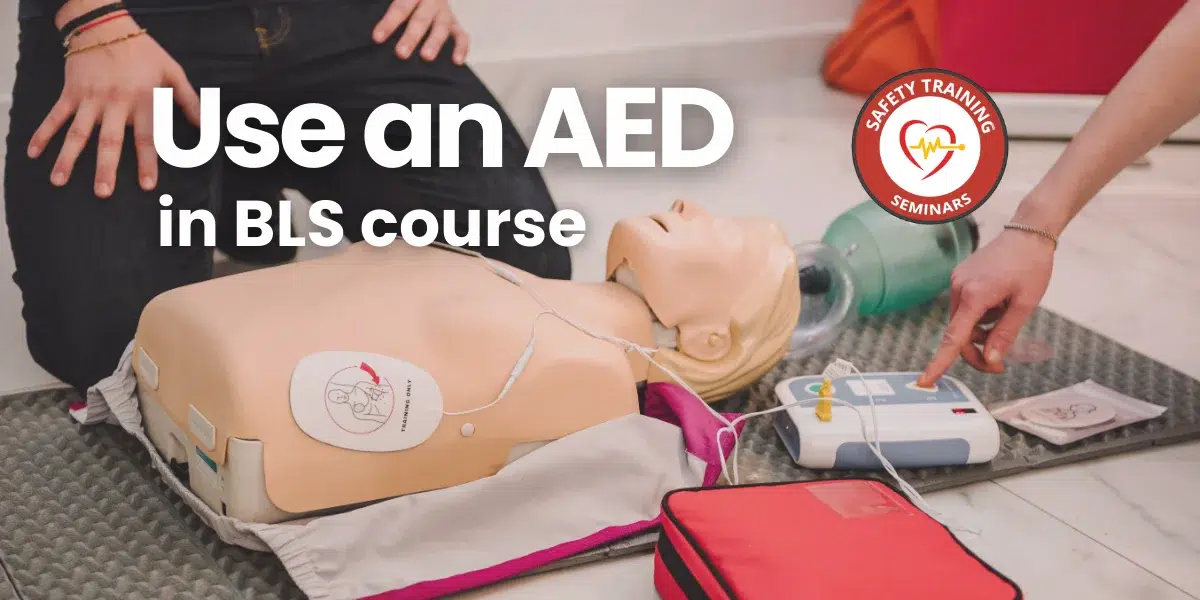
An AED is a portable electronic device that analyzes the heart’s rhythm and determines whether a shock is needed. If a shockable rhythm is detected, the device delivers an electrical shock to help the heart re-establish an effective rhythm.
In a BLS course, students learn that AEDs:
- Automatically analyze heart rhythm
- Provide clear voice or visual instructions
- Deliver shocks only when necessary
- Are safe and reliable when used correctly
Because AEDs are designed to guide the user step by step, they reduce hesitation during emergencies. Understanding how the device works helps responders trust the process and act confidently when seconds matter most.
When to Use an AED During an Emergency
Knowing when to use an AED is just as important as knowing how to use it. In a BLS course, responders are taught to recognize situations where AED deployment is appropriate.
An AED should be used when:
- A person is unresponsive
- The person is not breathing normally
- There are no signs of circulation
These signs indicate sudden cardiac arrest. Once identified, CPR should begin immediately while another responder retrieves the AED if available. Early use of the AED is one of the most effective ways how to save a life in cardiac emergencies.
Step-by-Step: How to Use an AED in a BLS Course
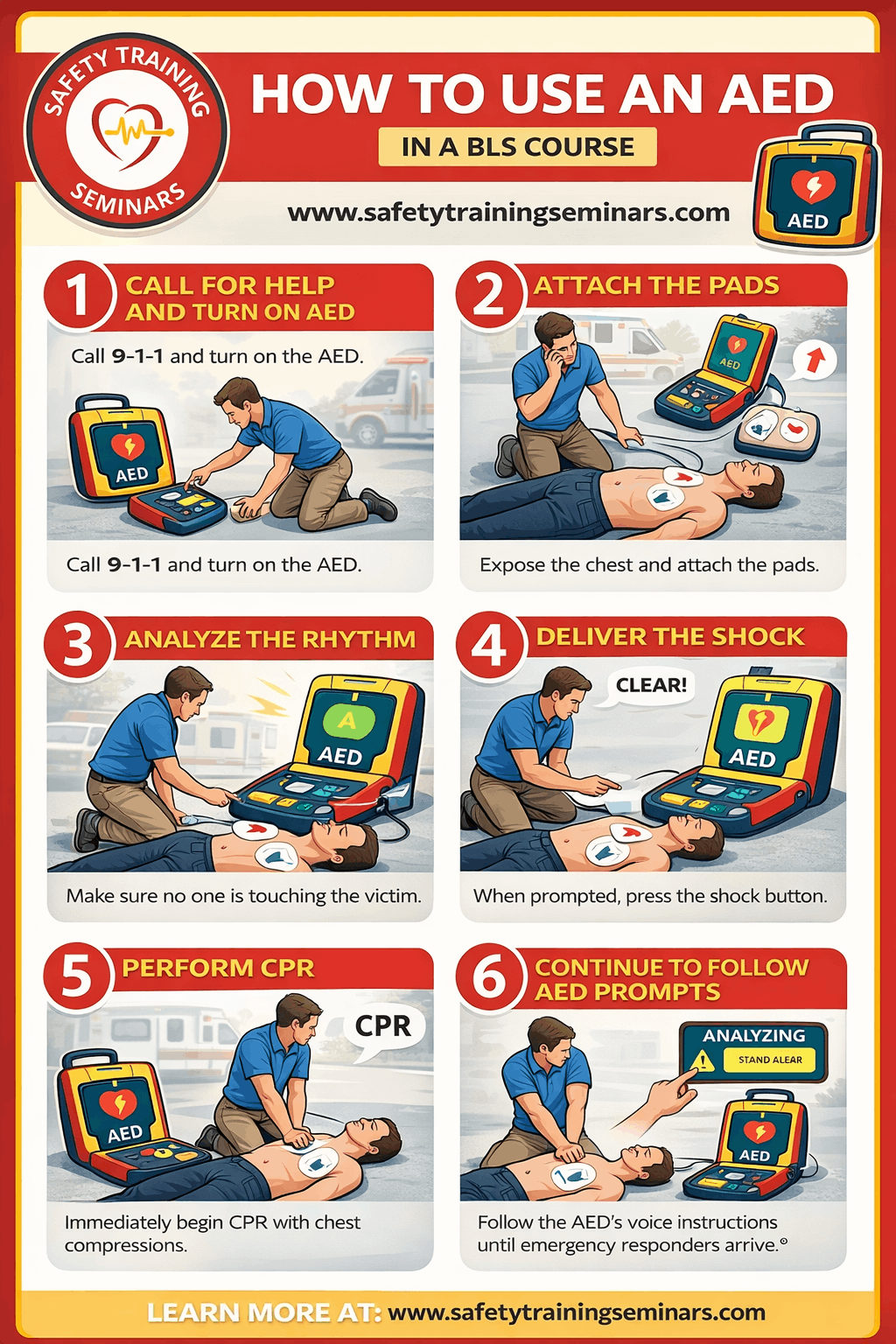
BLS courses teach AED use in a clear, repeatable sequence to reduce confusion under stress. Each step builds on the previous one to ensure safety and effectiveness.
The general steps include:
- Turn on the AED as soon as it is available
- Expose the chest and ensure it is dry
- Attach the adhesive pads as shown on the device
- Allow the AED to analyze the heart rhythm
- Ensure no one is touching the person
- Deliver a shock if advised
- Resume CPR immediately after the shock
AEDs are designed to guide users with prompts, making them accessible even in high-stress situations. Practicing these steps in a BLS course helps build muscle memory and confidence.
Safety Considerations When Using an AED
While AEDs are safe, proper precautions are essential. BLS courses emphasize safety to protect both the responder and the person receiving care.
Important safety reminders include:
- Ensure no one is touching the person during analysis or shock
- Remove medication patches from the chest if present
- Avoid placing pads over excessive moisture or metal objects
- Keep oxygen sources away during shock delivery
These precautions prevent injury and ensure the AED functions correctly. Understanding safety principles reinforces how to help effectively without causing additional harm.
Using an AED Alongside CPR
AED use does not replace CPR—it works alongside it. In a BLS course, students learn how CPR and AED use complement each other during cardiac emergencies.
CPR helps circulate oxygenated blood to the brain and heart, while the AED addresses abnormal heart rhythms. After each shock—or if no shock is advised—CPR must resume immediately. Interruptions should be kept as short as possible.
This teamwork between CPR and BLS AED skills creates the strongest response to cardiac arrest. Knowing when to switch between actions is a key focus of BLS training and critical to understanding how to save lives.
Common AED Mistakes and How BLS Training Prevents Them
Untrained responders may hesitate or misuse AEDs during emergencies. BLS courses focus on preventing these mistakes through repetition and hands-on practice.
Common mistakes include:
- Delaying AED use
- Forgetting to resume CPR
- Touching the person during shock delivery
- Incorrect pad placement
Training addresses these issues directly, helping responders act with clarity instead of fear. By practicing AED use in realistic scenarios, students gain confidence and competence.
Why AED Training Matters for Everyone
AED training is not just for healthcare professionals. Sudden cardiac arrest often occurs in public places where trained responders may not be present. In these situations, bystanders become the first line of defense.
Learning AED use through First Aid, CPR, and BLS training empowers individuals to act decisively. It removes uncertainty and replaces it with confidence. When people know how to help, communities become safer and more prepared.
At Safety Training Seminars, BLS courses are designed to be practical and accessible. The focus is on real-world readiness, not just classroom learning. These skills can be used anywhere, anytime.
Turning AED Knowledge Into Lifesaving Action
Knowledge alone is not enough. BLS courses emphasize practice, repetition, and understanding so that responders can act immediately under pressure. AED training builds confidence by showing participants that they can make a difference.
When responders trust their training, they respond faster and more effectively. That confidence can mean the difference between life and death. Learning how to save a life with an AED is one of the most impactful skills a person can acquire.
Final Thoughts: Preparedness Saves Lives
Using an AED in a BLS course teaches more than device operation—it teaches responsibility, readiness, and calm action in emergencies. These skills work hand in hand with CPR and First Aid to create a strong emergency response.
Safety Training Seminars is committed to providing accurate, practical, and empowering education. When you know how to help, you are prepared to step forward when it matters most—and that preparation saves lives.